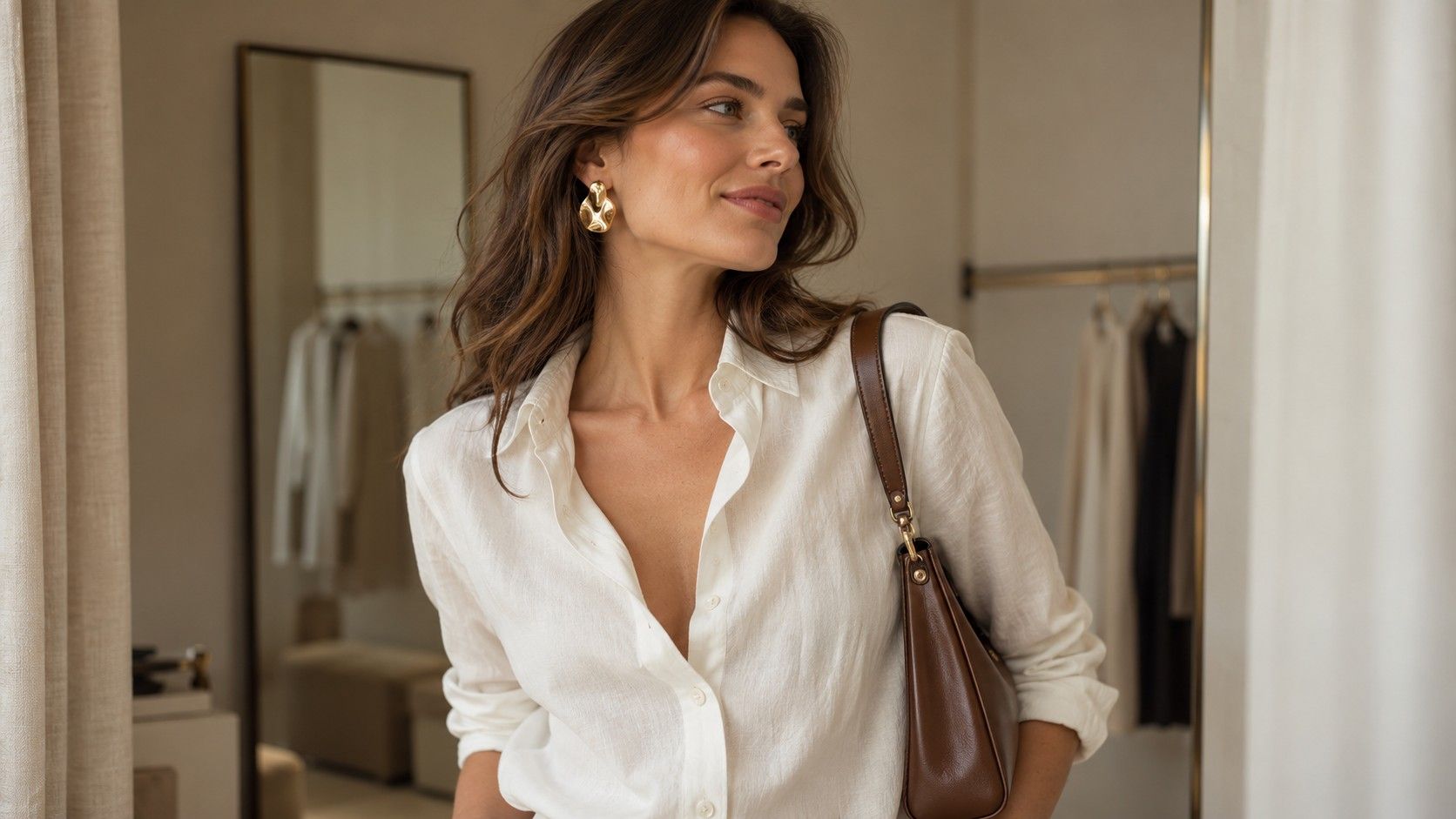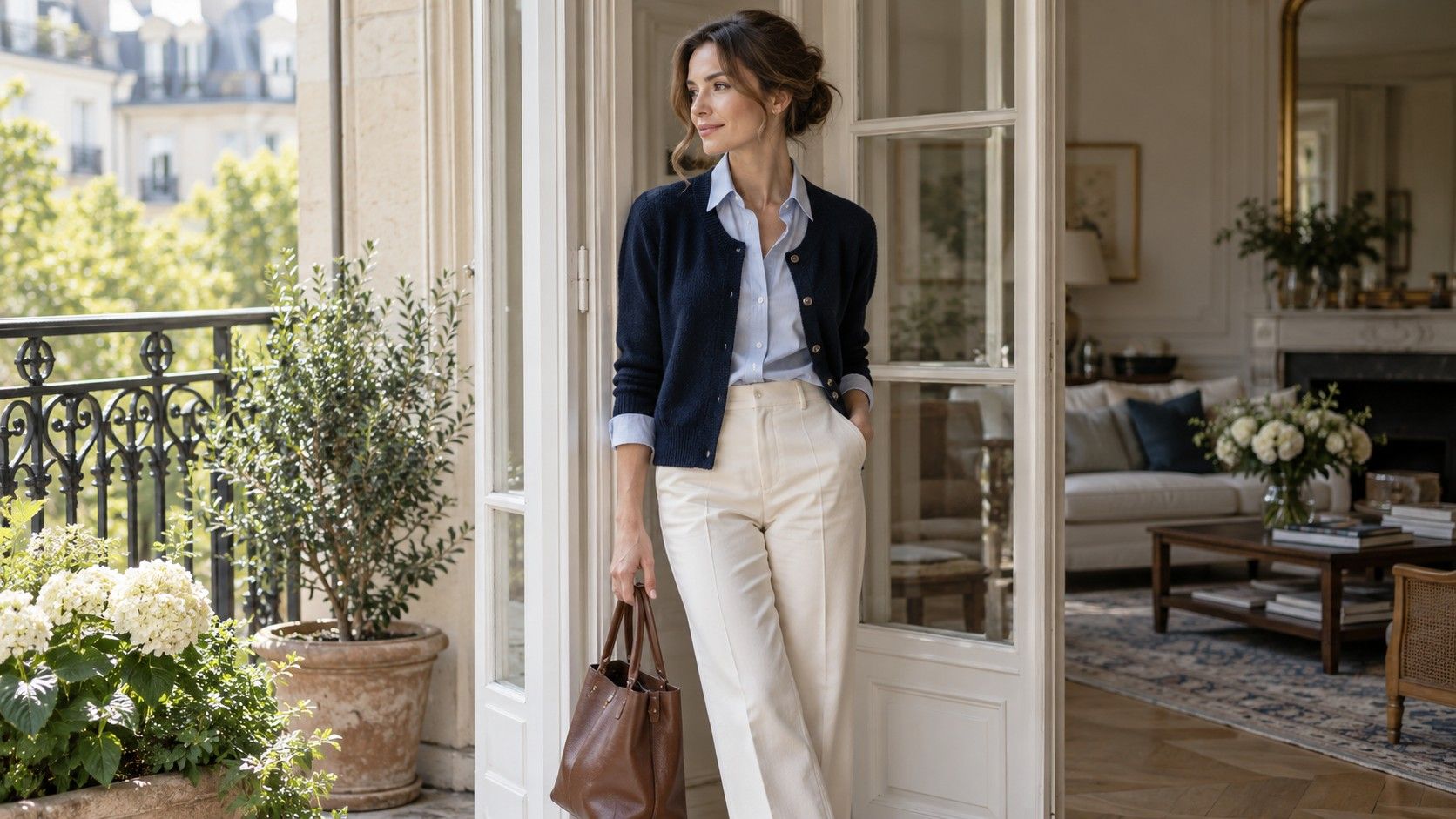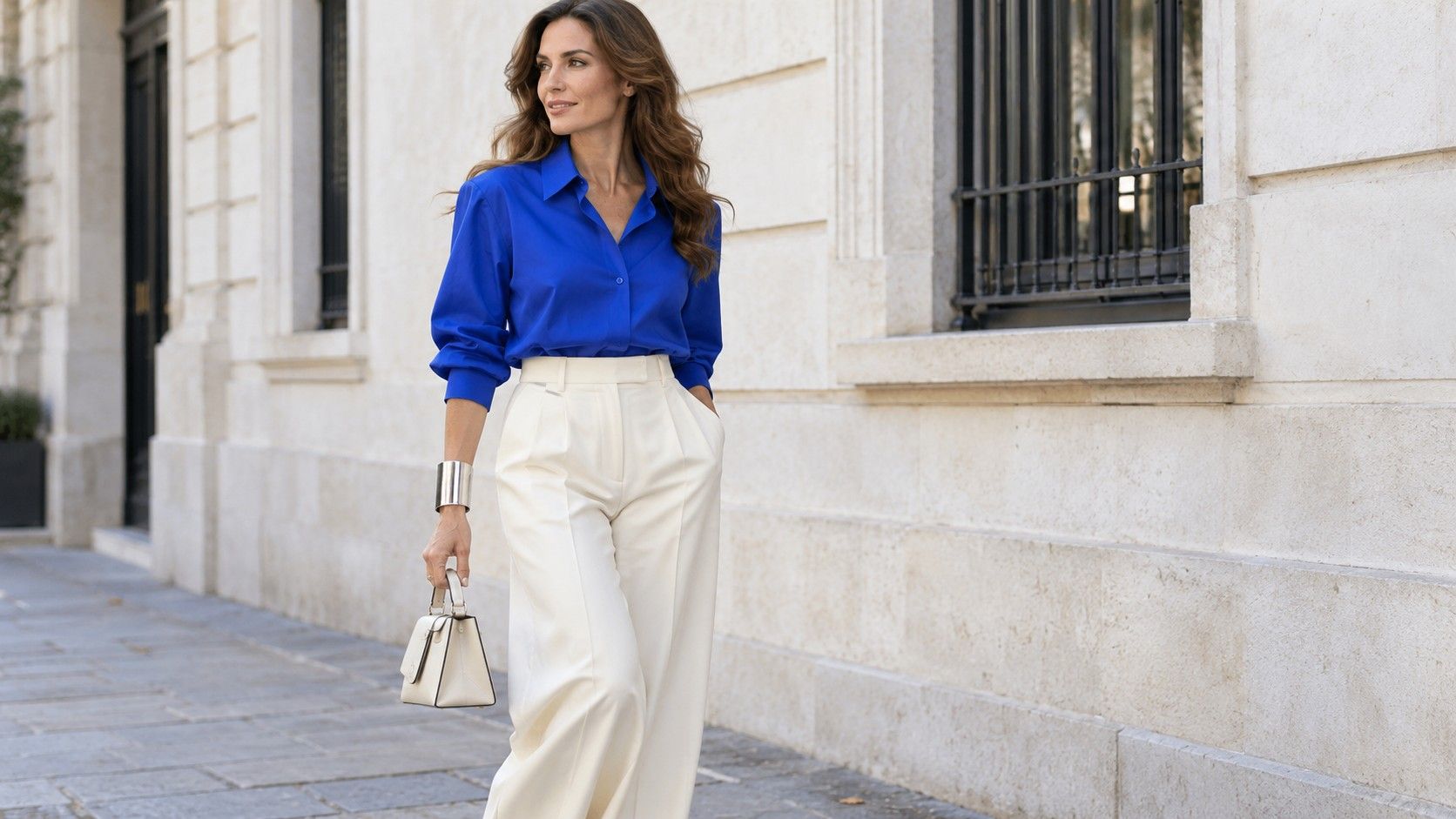
A style label can feel useful until it sends you shopping for clothes you would never choose on an ordinary Tuesday. Style essences become easier to explore when the starting point is your own wardrobe: the jacket you keep by the door, the shirt that works with three pairs of trousers, the earrings you put on without a debate. Look for a few repeatable details in those pieces, then borrow the vocabulary that helps describe them. You do not need a verdict about your face, body or character before you can make a satisfying outfit.
Use an essence word to describe the clothes
In personal styling, essence language can offer a shorthand for a visual impression. Someone might call an outfit dramatic because it uses a long angular coat and a bold cuff, or natural because its washed cotton and relaxed layers look informal. These are useful observations about garments. They do not establish what a person must wear, and the same coat may read differently when its shoes, fabric or setting change.
Treat an unfamiliar term as a prompt for a small question. If “classic” appeals, is it the neat collar, restrained trim or steady repetition of similar shapes? If “ethereal” interests you, perhaps you are drawn to a translucent layer or a softly blurred print. Naming the visible feature gives you something you can find again. Naming yourself and then trying to justify every purchase against that label creates more work.
Keep a plain-language alternative beside each word in your notes. “Romantic” could sit beside “curved neckline and gathered sleeve”; “gamine” beside “short jacket and contrasting buttons.” These pairings are examples, not category definitions. Different styling traditions use the vocabulary differently. A note that describes the actual neckline will still be useful if you later stop using essence labels altogether.
Read three outfits you already reach for
Choose three complete outfits you wear willingly, ideally for different parts of your week. A work outfit, a weekend combination and something for dinner will reveal more than three versions of the same occasion dress. Lay out the shoes and bag too. An outfit can owe much of its appeal to a familiar low boot or a shoulder strap that leaves your hands free.
For each outfit, write what you like in specific terms. “Comfortable” may mean a waistband that allows sitting, a shoulder seam that does not pull, or a jacket that fits over a sweater. “Put together” may mean repeating a dark color at the top and bottom. “Interesting” could be a textured belt against a smooth shirt. Try to give each outfit three observable features before reaching for a personal style essence label.
Then look for recurrence. Perhaps all three have an open neckline, even though one uses a T-shirt and another a blouse. Maybe every outfit includes a small area of crisp contrast: a white sole, a pale collar or a bright bag. A feature that survives different occasions is a useful candidate for your everyday outfit formula. A detail present only in the dinner outfit may simply be something you enjoy for dinner.
Also record the pieces that looked promising but stayed on the hanger. A stiff jacket might photograph neatly yet annoy you whenever you drive. That does not mean its style is wrong for your body. The garment may have the wrong construction, size or purpose for your day. Separate those problems before deciding you dislike an entire visual direction.
Compare one visible feature at a time
Start with a base you already trust, such as straight trousers, a simple knit and shoes you can walk in. Change only the detail you want to examine. Comparing an entire ruffled dress with a sharply tailored suit asks too many questions at once: fit, color, occasion, texture and amount of decoration all move together. You will learn more from changing a necklace while the rest stays steady.
| Detail to explore | A small comparison | What to notice |
|---|---|---|
| Shape | Rounded pendant versus angular pendant on the same top | Which shape repeats or interrupts the neckline in a way you enjoy? |
| Texture | Smooth cardigan versus softly brushed cardigan of similar weight | Do you prefer a clean surface or a more tactile finish? |
| Scale | Small studs versus wider earrings with the same hairstyle | How much attention do you want near your face today? |
| Contrast | A belt close to the trouser color versus a clearly contrasting belt | Do you like an uninterrupted line or a visible pause? |
| Movement | A fluid scarf versus a firmer folded scarf | Does loose movement feel enjoyable or inconvenient? |
Use the table as a menu, not a checklist to finish in one sitting. A scarf comparison can happen before leaving the house. Accessory scale might take another day, when your hairstyle and neckline make both options practical. If a result is unclear, leave it unclear. One mirror moment does not have to decide a lasting preference.
A photograph can help you remember the combination, but it is only one view. Stand normally, keep the camera position similar and avoid judging tiny differences in lighting as changes in harmony. Check the outfit while sitting and moving as well. A necklace that looks pleasing when still may keep knocking against your desk; that information belongs in the decision.
Leave your body and personality out of the scorecard
You can enjoy fine lace without being delicate, bold stripes without being outgoing, and oversized pockets without proving a connection to nature. Clothing preferences do not need a personality explanation. The point of the exercise is to discover details you want to wear, including details that express a mood you do not display every day.
Keep fit questions concrete. If a sleeve pulls when you reach forward, inspect its cut and room across the back. If a neckline shifts, check the shoulder fit and how the fabric hangs. Neither issue tells you which essence you have. A comfortable replacement may preserve the same visual detail while improving the construction.
Avoid using age, ethnicity, weight or facial measurements as a shortcut to a shopping rule. Such shortcuts can turn a flexible styling interest into an uncomfortable inspection of yourself. Put the attention back on the garment: the width of the trim, the density of a print, the height of a collar. Those are features you can change without treating your appearance as a problem.
There is also room for preference to shift. You might like polished metal at work and woven accessories on holiday, or want quiet clothes during a busy month. Context helps explain that variation. It does not make your wardrobe inconsistent. A useful system should leave room for the life you actually lead.
Turn one observation into a repeatable outfit
Choose one feature from your three familiar outfits and make it the anchor. Suppose the common thread is a clean neckline with one noticeable accessory. Your repeatable idea might be “plain open-neck top, comfortable trousers, one sculptural earring.” That sentence can guide several outfits without requiring the same colors, brands or garments each time.
Build the first version entirely from what you own. A V-neck sweater, dark jeans and curved silver earrings might be enough. For a more dressed occasion, keep the neckline and earrings but swap the jeans for trousers with a finish you like. If both outfits satisfy the same preference, you have found a useful connection between garments rather than a reason to buy a whole new wardrobe.
Write down the practical limits too: the earrings catch on a scarf, the sweater needs a layer outdoors, or the trousers work best with flat shoes. These details help you repeat the outfit successfully. A formula that ignores weather, laundry and walking distance will remain an attractive note instead of something you wear.
Only then consider a gap. If one plain top would connect several pieces, describe the gap precisely: washable fabric, a neckline clear of the pendant, enough sleeve room for a cardigan. “Something that matches my essence” is a much less useful shopping instruction. A specific garment description makes it easier to pass on a pretty piece that does not serve your wardrobe.
After a few wears, keep the parts you reach for and loosen the rest. Your notes may eventually point toward a blend of style essences, or they may stay as simple descriptions of shape, texture and detail. Either outcome is useful if getting dressed becomes easier and the clothes feel like choices you made for yourself.