A pair of earrings can look generous beside a bare neckline and almost disappear next to a patterned collar. Accessory scale is relational: the clothes, spacing, colour and surface around a piece affect how prominent it seems. Begin with one outfit you already enjoy wearing, then change one accessory at a time. You do not need to measure your face or assign yourself a style category to decide what you like.
Choose one neckline for a fair comparison
Choose a top with a neckline that stays in place, and wear it as you normally would. A crew-neck knit makes a different background from an open shirt, so avoid switching between them during the first comparison. Remove a scarf or necklace temporarily if it blocks your view of the earrings. You can add the layers back once you know what the earrings contribute.
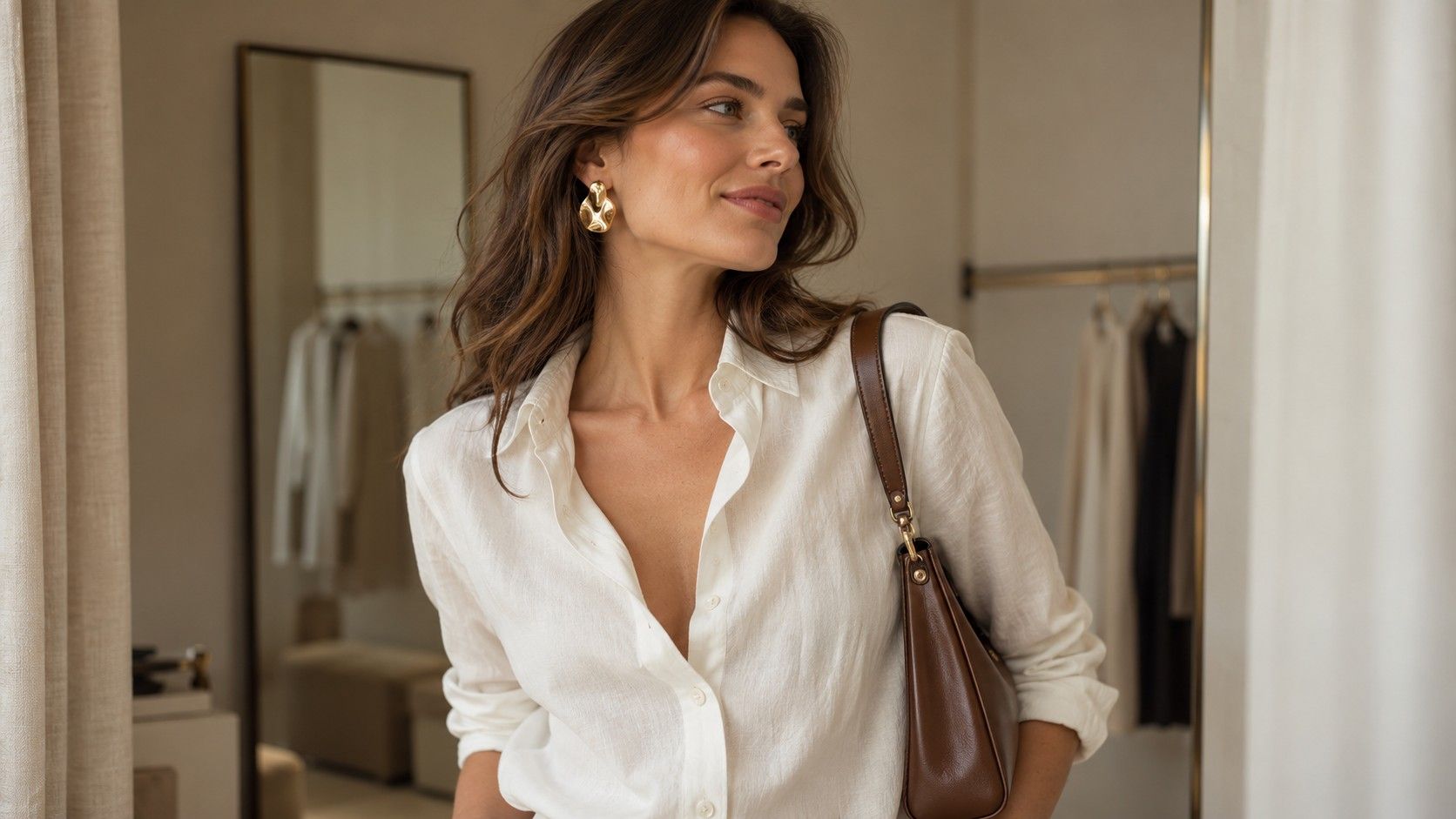
Compare two pieces with a clear difference: a small stud and a medium hoop, or a narrow drop and a broad flat shape. Similar pieces make the effect harder to see. Look at the space between the jewellery and the neckline as well as the object itself. A long drop may sit close to a collar tip and create an awkward collision, even when you like its size in isolation.
Necklaces need the same context. A pendant that ends just above the top edge creates a different arrangement from one that rests on the fabric. Walk and bend forward to check where it settles. If a pendant repeatedly slips inside the neckline, a slightly different chain length may help more than a larger pendant. Secure, comfortable placement is part of the visual result.
When using accessory scale with style essence language, describe what you see before choosing a label. A smooth compact hoop gives a concentrated accent; a long narrow drop draws a line; a broad textured earring supplies a larger patch of detail. These observations can guide shopping without turning a style descriptor into a rule about your body.
Read earrings from a conversational distance
Step back from the close mirror. The earring you can inspect at arm’s length may read as a glint rather than a shape from across a table. Ask whether you want a small point of light, an identifiable outline or an obvious colour accent. All are useful effects. The right choice depends on the outfit and the kind of presence you want that day.
A polished surface often catches attention differently from a matte one of the same size. Compare a slim shiny hoop with a similarly sized fabric-covered button earring. The hoop may flash as you move; the button may read as a steady area of colour. Physical dimensions alone will not predict which feels more prominent against a dark jacket or light shirt.
Hair, glasses and collars share the area around the earrings. Wear your hair in its usual arrangement and put on your glasses during the comparison. If a drop catches in loose hair, try a smoother shape or another fastening. If the earrings and glasses both have bold outlines, you may enjoy the repeated line, or prefer a quieter pair with that particular frame.
To compare earring scale in outfits fairly, keep your viewing position and lighting steady. Look straight ahead, turn slightly and move your head as you would in conversation. A frontal photograph can hide the depth of a hoop or a swinging drop. The side view may reveal a collision with the collar that never appears in the front mirror.
Consider how often the piece will be seen at that distance. For a dinner, a small textured shape may be easy to appreciate across the table. For an event in a large room, a clearer outline may remain more legible. That is a choice about visibility, not a requirement to wear something larger whenever the occasion is formal.
Balance the bag with the whole outfit
Put the bag on your shoulder instead of holding it beside the mirror. Its position, strap width and fullness become part of the outfit. A small bag with a broad contrast strap can make a stronger visual mark than a larger bag in the same colour as your coat. Look at the strap and hardware along with the main body.
A structured bag and a soft tote occupy space differently. The structured bag keeps a defined outline even when nearly empty; a tote folds and expands around its contents. Test the bag with the things you need to carry. A shape that looks neat empty may bulge around a water bottle, while a larger bag may settle into a softer outline once worn.
Body proportions are relevant through where the bag sits, rather than through a rule assigning bag sizes to people. Adjust the strap so the bottom edge meets a different point on the jacket or trousers. A bag resting directly on a bulky pocket may sit crookedly. Moving it slightly can make it easier to reach and create a cleaner junction between the garments.
Bring the shoes into view. A substantial sole, a large bag and a heavy coat can form a coherent practical combination, but you may prefer a lighter bag to break up that weight. With a fluid dress, try a soft bag and a structured one before deciding. The structured shape might provide a pleasing interruption rather than needing to imitate the dress.
A work bag must first fit the actual equipment. Check the laptop compartment, closure and handle drop with the bag loaded. If the capacity is fixed, adjust the visual effect through colour or surface instead of choosing an impractically small option. A low-contrast bag can feel quieter; a contrasting handle or buckle can make the same volume more noticeable.
Separate visual scale from physical weight
A large accessory can be lightweight, and a small one can feel heavy. Hollow forms, fabric and thin materials may provide a broad shape without the weight of a dense solid piece. Product dimensions will not tell you how something feels after wearing it. Check the fastening and pressure points, especially with earrings, cuffs and narrow bag straps.
For earrings, start with a short period of wear at home and notice pulling, pressure or repeated movement. Remove pieces that feel uncomfortable. A lighter version of the same outline may suit you better. There is no reason to keep an uncomfortable pair because its visual scale appears to fit a style recommendation.
A bag strap can create a narrow graphic line while concentrating the load on one part of your shoulder. Try the loaded bag over the coat you plan to wear, then over a thinner layer. A wider strap may distribute the load more comfortably for you, although its look changes too. Consider both results before choosing a strap purely for its silhouette.
Fabric movement affects accessories in less obvious ways. A rough cuff can catch a fine knit; a long chain can swing into a desk; a ring can snag inside a pocket. Run through the ordinary actions involved in your day. Try fastening your coat, using your phone and taking keys from the bag. The piece should let you use the clothes around it.
If you want a bold accent with fewer practical obstacles, concentrate it somewhere less exposed to catching. A smooth brooch on a stable jacket lapel may suit your routine better than several bracelets. Check that its pin and weight are suitable for the fabric. A heavy pin on a fine knit can pull the material out of shape.
Use photographs as notes rather than a verdict
Take comparison pictures from the same position with the camera at a similar height. Include the whole outfit when assessing a bag and a closer view when checking a neckline. A phone held close to your head can exaggerate the nearest object, while a wide full-length view may hide a delicate earring. Treat each image as one piece of information.
Write down the relationship you liked: a broad matte earring beside a simple neckline, a narrow chain on textured wool or a medium structured bag against loose trousers. That note tells you more than a verdict such as “large accessories work.” The same piece can behave differently with another collar, hairstyle or fabric texture.
Colour also changes visual emphasis. A dark bag against pale clothing draws a clear boundary, while a bag close in colour to the coat may blend into the silhouette. Personal color preferences can help you choose shades you enjoy, but you can place a contrasting accent at the bag even if you prefer quieter colour near your face.
Keep one reliable combination for days when you do not want to experiment. Store the earrings near the top they work with, or note the useful chain length for a particular neckline. Add a new piece only when it offers a distinct job, such as a lighter earring or a bag that fits your daily load. A smaller set of useful choices makes comparison easier.
An accessory earns its place when you like its effect and can wear it comfortably. You may choose a prominent pair one day and tiny studs the next. Neither decision overturns the other. Scale is a tool for arranging an outfit, with room for mood, weather, work and the simple pleasure of wearing something you enjoy.