A plain outfit can feel considered, unfinished or simply comfortable. Those reactions tell you more than the label on its hanger. Classic style essence can be a useful phrase for an interest in measured detail and visual continuity, but it does not require a prescribed wardrobe. Treat it as a direction to explore through clothes you enjoy, without using your face, measurements or personality to decide whether you qualify.
Find the level of detail you actually like
Start with an ordinary outfit: a cotton shirt, trousers and shoes you can walk in. Notice which unfinished detail bothers you first. Perhaps the shirt hem bunches under a belt, the shoes look much heavier than the fabric, or a bright buckle keeps drawing your eye. Adjust that one point before adding jewellery. A tidy hem may do more for the whole arrangement than another accessory.
Now compare two versions of the same outfit. Wear the shirt open at the neck, then fasten one more button. Keep everything else in place. A closer neckline might give you the contained finish you wanted; it might also feel restrictive. The useful answer includes comfort. A collar that looks good for a moment but presses against your throat is a poor foundation for a working day.
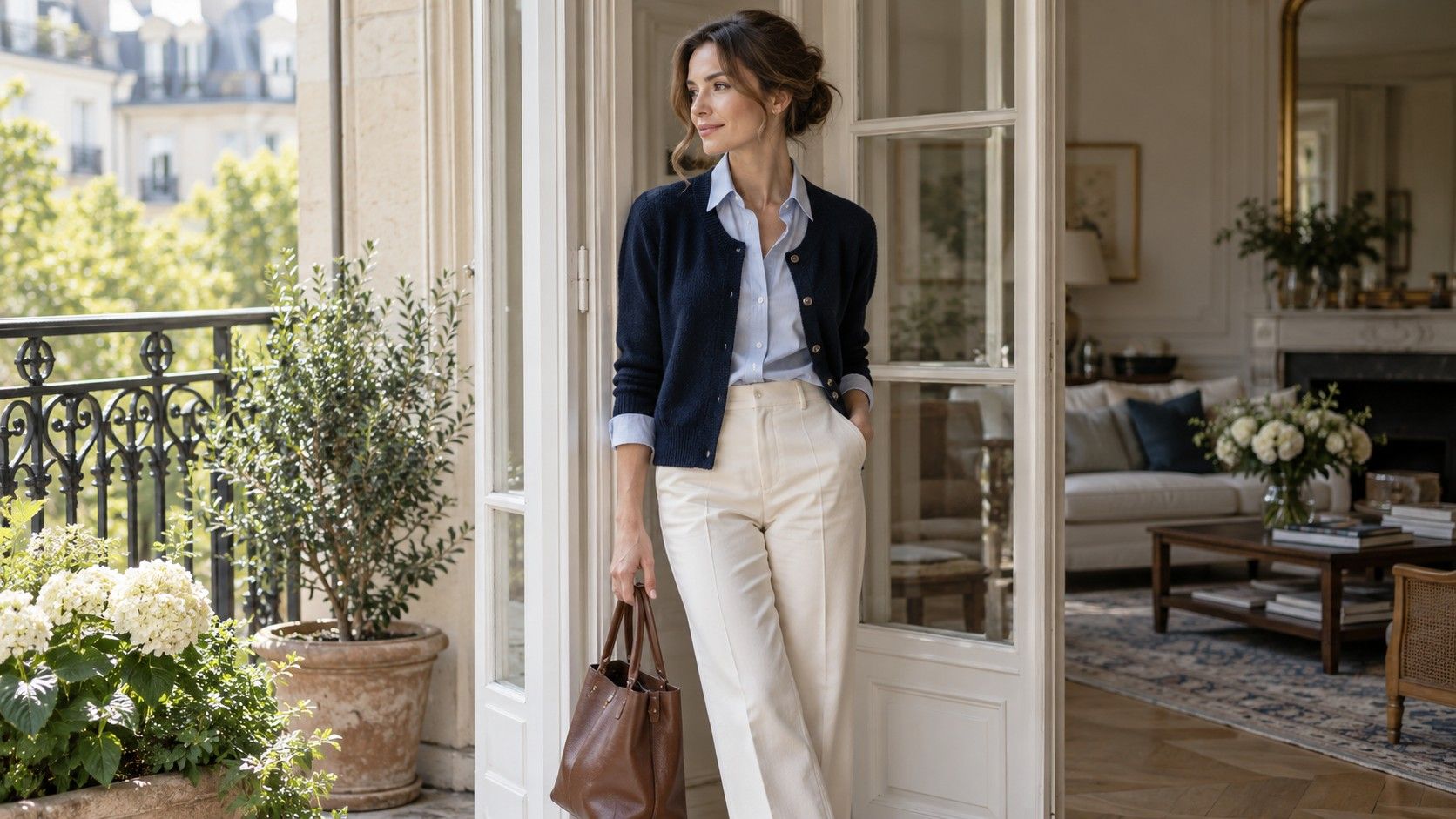
Choose how much visible activity you want rather than assuming less is always better. Fine stripes, a softly textured cardigan and a small pendant can sit comfortably together. If all three feel busy, remove the pendant first and look again. If the result feels bare, return it. There is no virtue in stopping at the fewest possible pieces.
Compare scale rather than chasing symmetry
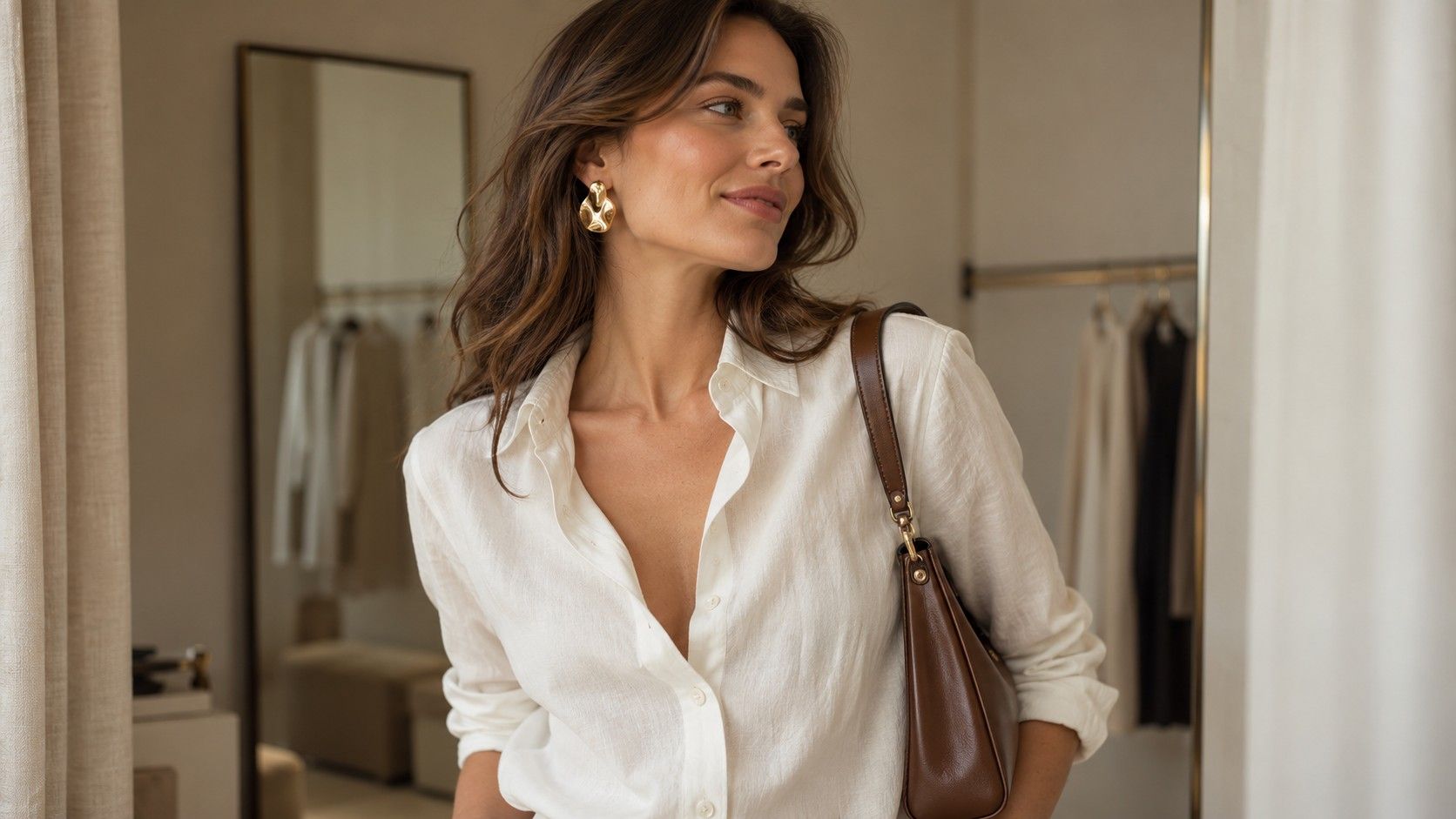
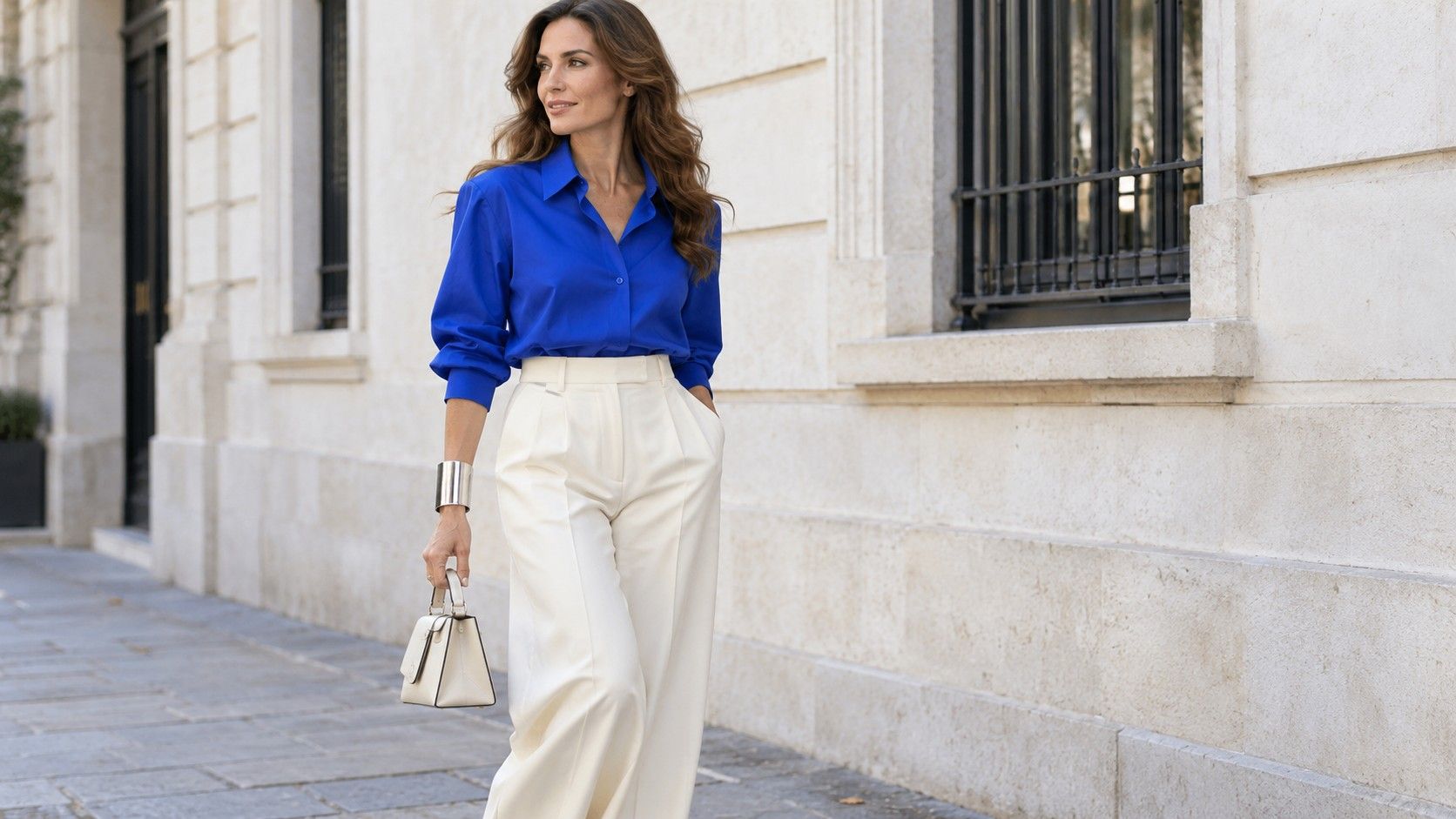
A balanced-looking outfit need not be symmetrical. An off-centre fastening or a single sculptural earring can work with quiet clothing. The question is whether the sizes and visual weights make sense together. A substantial cuff may compete with tiny buttons and a delicate collar, while a medium-width bracelet can repeat the shirt cuff more gently. Neither pairing says anything about who is allowed to wear it.
Use a familiar garment as a reference point. With a close, smooth neckline, compare a short chain with a pendant on a longer cord. The first keeps attention near the neck; the second extends it down the front. Then consider the bag strap crossing that space. Two long lines may look deliberate, or the strap may interrupt the pendant in a way that annoys you whenever the bag moves.
Body proportions enter this experiment through placement, not a diagnosis. A jacket hem ends at a particular point on the trousers; a crossbody bag rests at a particular height. Shift the bag strap or try a different jacket length and observe the relationship. You are arranging garments on your body, not correcting your body to match a drawing.
Check accessory scale from the distance at which people usually see the outfit. A tiny clasp can be delightful up close and almost invisible across a room. A large buckle can become the first thing noticed. If you want the clothes to read as one continuous composition, repeat a similar degree of emphasis at two points, such as a medium belt buckle and shoes with a modest metal detail. Exact matching is optional.
Make a simple shirt and trousers feel finished
Classic outfit details often come down to the junctions between garments. Look at the collar beside the cardigan, the sleeve under the jacket and the trouser hem above the shoe. A shirt cuff trapped inside a narrow sleeve can create a ridge; a full trouser hem may pile up on a thin flat shoe. These are practical fitting relationships, not evidence that either item is wrong for you.
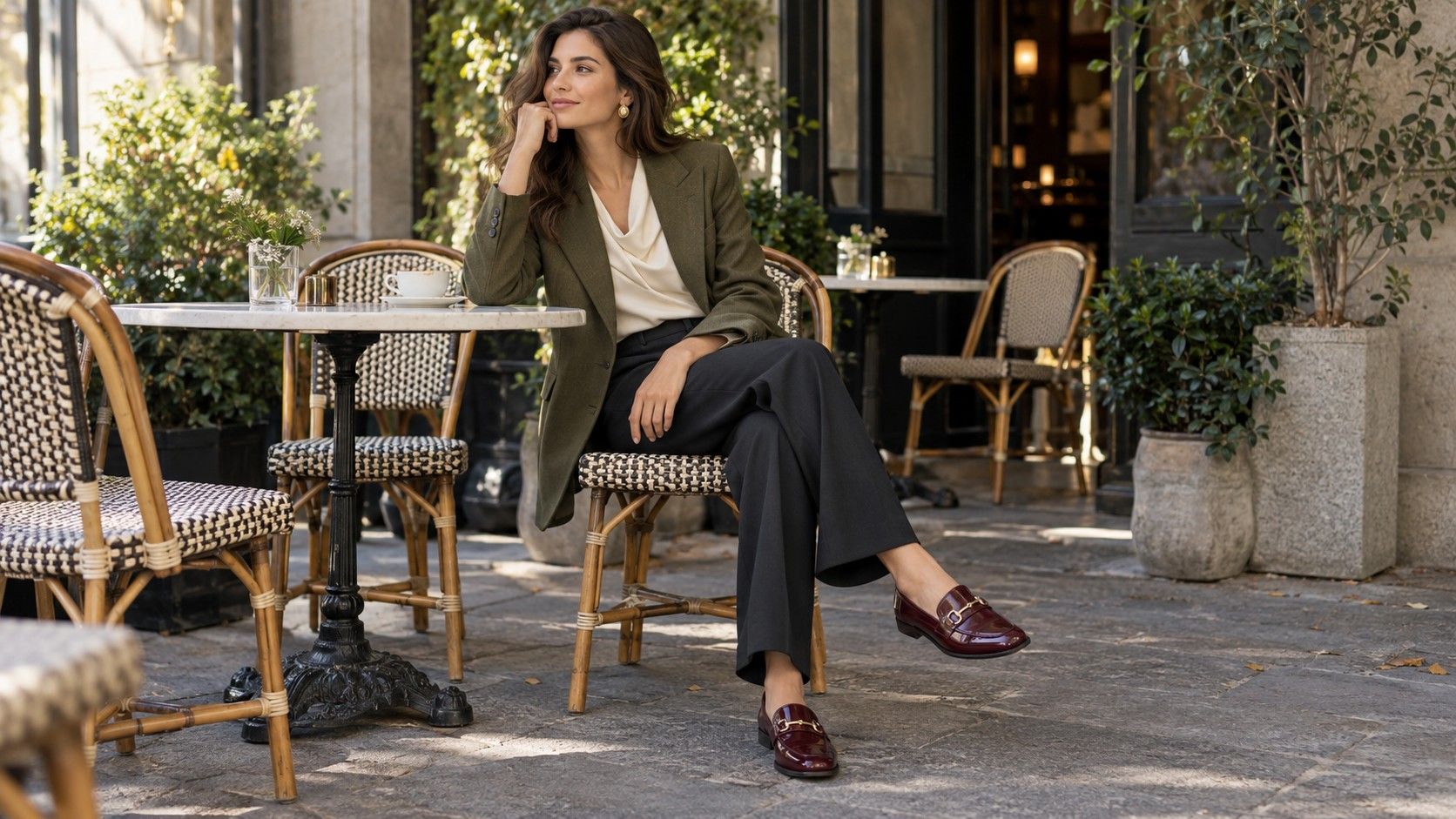
For a straightforward weekday combination, try a blue shirt, charcoal trousers and dark loafers. Leave the collar relaxed and choose either a full tuck or an intentional untucked hem that clears your pockets. Add a belt only if you like the line it creates or need it to hold the trousers securely. A belt is not a compulsory finishing stamp.
Fabric texture can supply interest when the cuts are simple. Brushed cotton against smooth wool looks different from crisp poplin against fluid crepe. Lay the garments together in daylight, then wear them and move. A fabric that hangs neatly on a chair may catch on another fabric at the waist. Static, cling and friction can change the result more than a subtle colour difference.
For a softer version, replace the shirt with a fine knit and choose trousers with enough ease to sit comfortably. The neckline might be a shallow V, a crew neck or an open polo collar. Look at the space between neckline and jacket lapels: several small shapes crowded together can feel fussier than one broad opening. Try removing a layer before buying a new top.
Shoes alter the finish without requiring formal tailoring. A clean trainer can work with a relaxed shirt if its sole and panels do not overwhelm the outfit you want. A loafer adds a sharper edge; a flexible ankle boot can carry the same clothes into cooler weather. Choose the actual walking surface and weather first, then refine the shape.
Introduce one unusual piece
Quiet clothing gives an unusual piece room to be noticed. Consider a deep green bag with a curved handle, a printed silk scarf or a jacket with an asymmetric front. Choose the feature you want to see, then let the neighbouring pieces support it. A curved bag may need nothing more elaborate than a plain coat and shoes with an equally smooth surface.
An unusual piece does not have to be expensive or bold in colour. A shirt with a generous cuff can provide enough variation. Wear it once with the cuff visible and once folded inside the jacket sleeve. If the first version is pleasing but gets caught on your keyboard, reserve it for a different setting or choose a narrower cuff. A detail earns its place through use as well as appearance.
Personal color preferences can guide the experiment without becoming another set of restrictions. If clear white feels too stark beside your favourite jacket, compare it with cream, pale grey or a muted blue. Keep the shapes similar so the colour change is easy to judge. You may prefer contrast at the neckline and quiet colour elsewhere; you may enjoy a closely related range from top to shoes.
If the unusual item seems detached, repeat one property rather than matching everything. The dark line in a scarf could connect to a shoe, or a matte bag could echo a textured coat. Avoid adding several rescue accessories at once. When a piece needs constant explanation from the rest of the wardrobe, it may belong in a different combination.
A casual evening outfit can use the same method: straight trousers, a simple knit and one pair of distinctive earrings. There is no need to add a formal bag merely because the earrings look dressy. Test the mixture as a whole. The most useful question is whether you want to wear it, not whether every object belongs to an identical category.
Check care and comfort before keeping the look
A restrained outfit can expose small maintenance problems because there is less competing detail. Check a shirt for puckered seams, a knit for pilling and trousers for a twisting leg seam. These observations help you decide what needs pressing, mending or replacing; they are not a demand for immaculate clothes every day. A washable cotton shirt may suit your routine better than a beautiful fabric that needs care you dislike.
Do a short movement check before leaving home. Sit, reach for a high shelf, put on your coat and carry your usual bag. Does the shirt pull across the upper arms? Does the waistband fold? Does the necklace catch on the neckline? Fabric movement should let you use your arms and sit down without repeatedly restoring the outfit to its starting position.
Keep a small record of combinations that worked: the shirt name, trouser shape, shoe and one detail worth repeating. A note such as “open collar, no necklace, brushed belt” is more useful than “be more classic.” Photographing the outfit can help compare placement, but inspect it in ordinary light too. A camera angle can exaggerate a shoe or hide how fabric behaves in motion.
Before buying an extra finishing piece, identify the missing job. You may need a bag that closes securely, a softer neckline or trousers that work with rain shoes. Those are concrete needs. Buying another plain top because the wardrobe is supposed to look timeless can leave the same unresolved fit problem in place. Keep the details that make getting dressed easier and the clothes more enjoyable to wear.