A strong collar or an angular bag can change the mood of clothes you already own. The useful question is how much emphasis you enjoy and where you want it to sit. Start with shape and a few practical comparisons, then keep the colors, softness and degree of formality that fit your day.
Choose one clear visual line
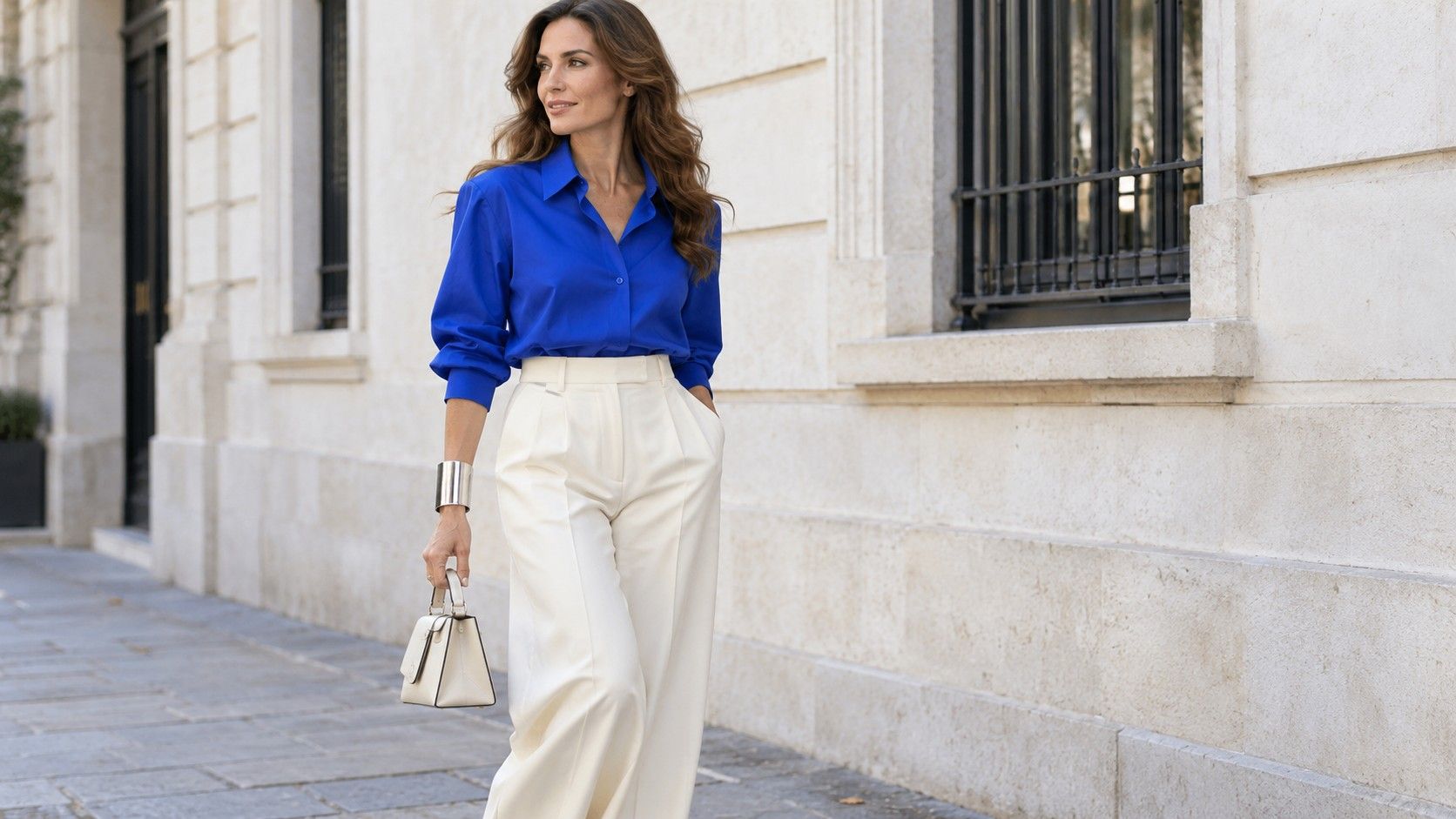
A dramatic outfit can begin with a line you can trace: the straight opening of a long jacket, a pointed collar, a narrow trouser crease or the diagonal of an asymmetric hem. Pick one as the starting point. A blue shirt with a crisp collar and cream trousers already offers a clear direction; adding a long pendant, a striped scarf and several angular belts may make that direction harder to see.
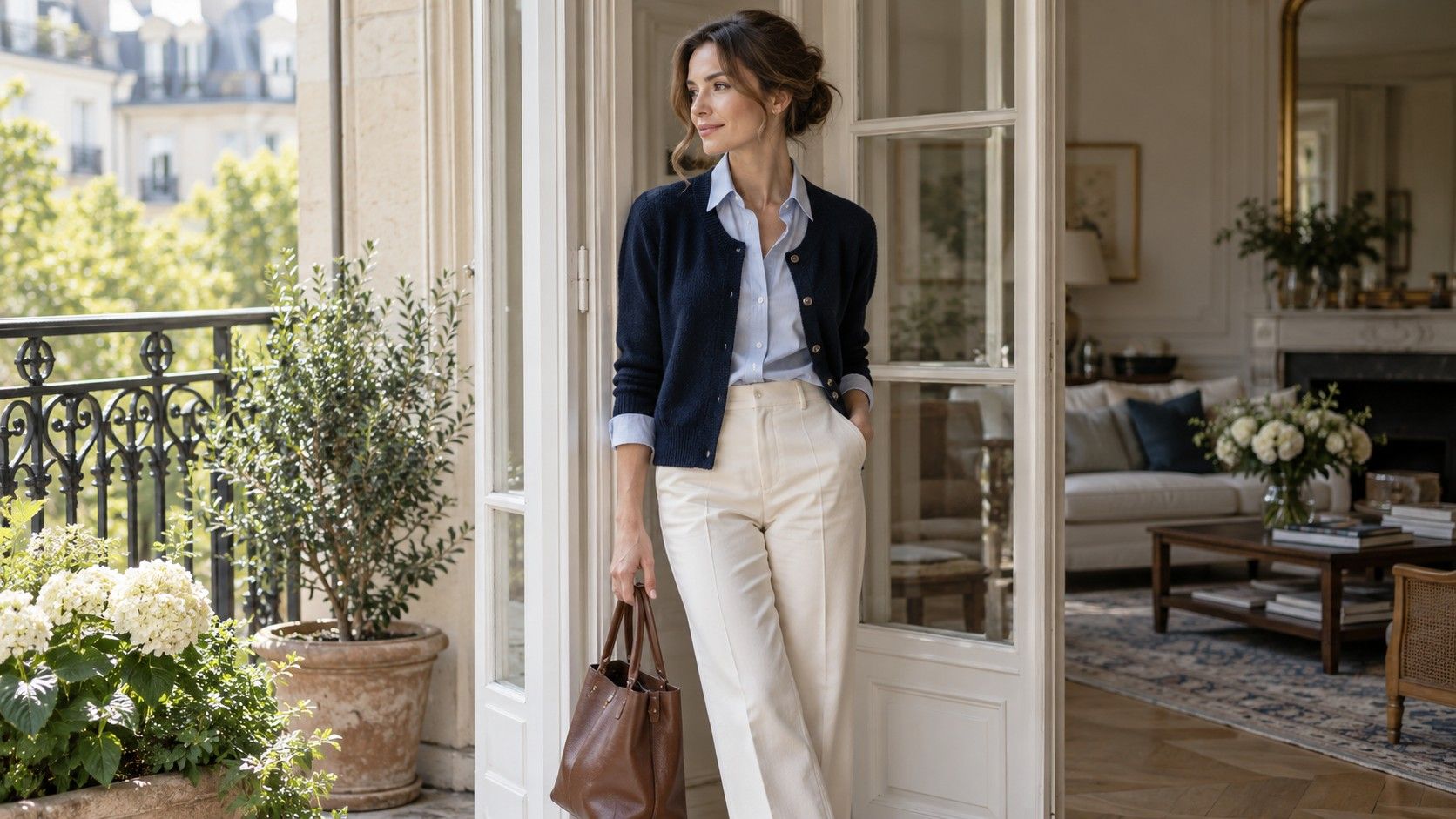
Lay the clothes on a bed before putting them on. Notice where the strongest edges sit and whether they compete. With a long open cardigan, a simple top underneath lets the opening remain visible. A crossbody strap cuts across that opening, which may be exactly the diagonal you want. If it looks accidental, shorten the strap or carry the bag by its handle and compare.
Length is an option, not a requirement. A short boxy jacket can create a firm horizontal edge over a plain dress. A deep V neckline can provide a longer line without a long garment. Choose the version that works for your setting and comfort. A neckline that needs constant checking will probably receive more attention from you than its visual effect deserves.
The phrase dramatic style essence can be useful shorthand for this interest in definition, scale and visual emphasis. It does not establish what your body must look like or which garments you are allowed to wear. Keep the description only while it helps you make a clothing decision.
Use scale instead of adding more decoration
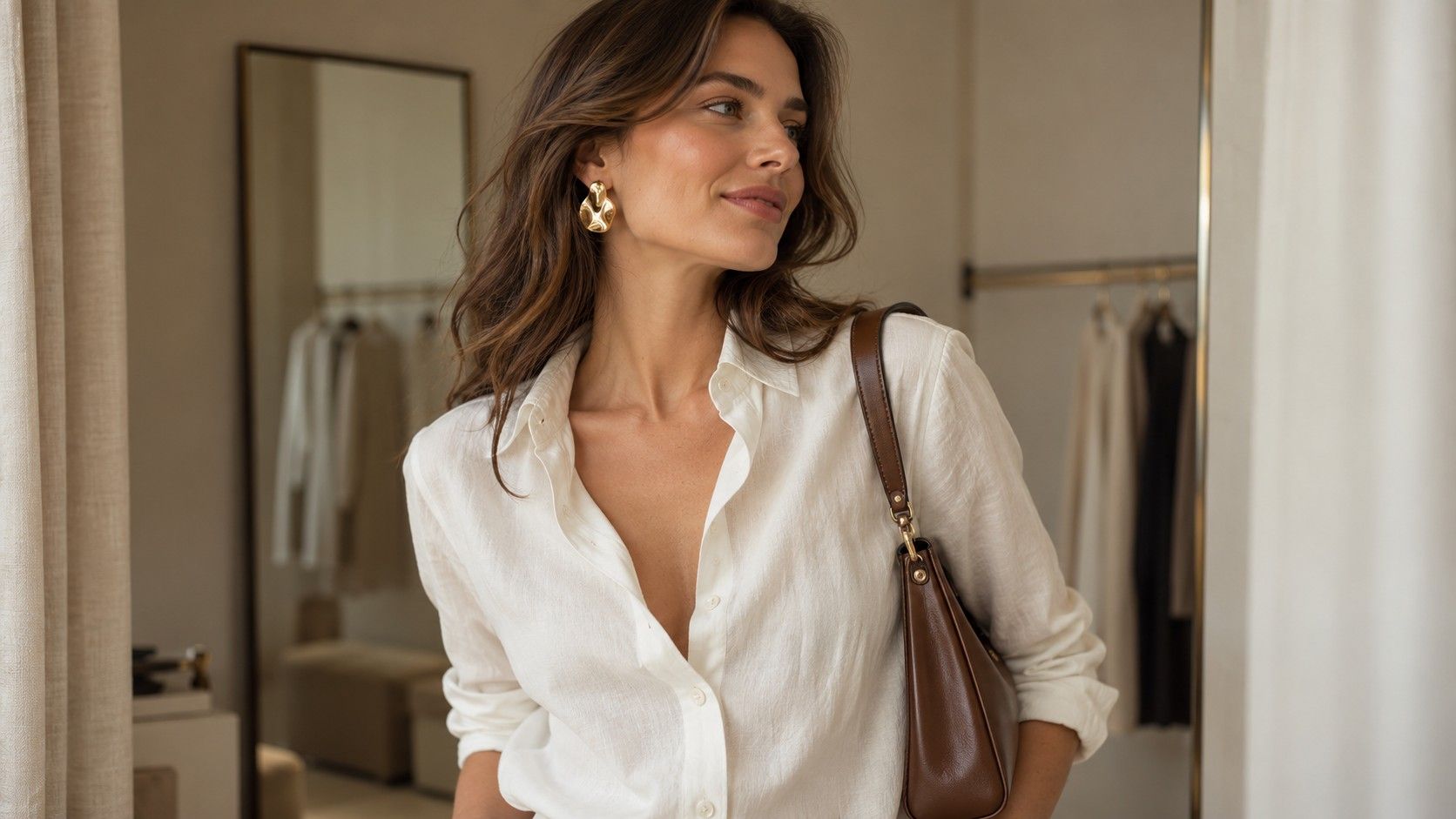
A single substantial object often makes a clearer statement than a cluster of small ones. Try a broad cuff with an otherwise quiet shirt, a rectangular bag against a soft knit or one pair of sculptural earrings with an open neckline. The relevant comparison is the object beside the clothes. A buckle that looks large on a narrow belt may disappear next to an oversized jacket.
Check practical scale too. Earrings should clear a high collar when you turn your head. A cuff should leave room to bend your wrist and type. A large bag can look clean and deliberate, but if its corners strike your hip at every step, a softer shape or shorter handle may be the better choice. An accessory earns its place by being wearable as well as visible.
If you like several bold pieces, give them a relationship. A square buckle and rectangular bag can repeat a shape, while a bright earring and plain shoe can share a color. Repetition provides a connection without requiring a matched set. Leave a little space around the strongest piece: bare forearms around a cuff or an uncluttered neckline around earrings help you see its outline.
Use the table as a set of substitutions when an outfit feels busy. Each row keeps a point of emphasis while reducing the number of competing decisions.
| When this feels awkward | A change to try | What changes |
|---|---|---|
| Several necklaces at a pointed collar | One substantial earring | Leaves the collar outline visible |
| Many small bag ornaments | A plain rectangular bag | Uses shape as the point of emphasis |
| Bold buckle, scarf and cuff together | Keep the cuff; simplify the rest | Makes one detail easier to notice |
Try sharp detail in colors you enjoy
Black is one route to strong contrast, but a sharp cut remains sharp in other colors. Think of a cobalt jacket with a straight lapel, a tomato-red bag with a rectangular outline, or a pale yellow shirt with an exaggerated pointed collar. Their effect comes from shape, placement and the contrast around them. You can experiment with dramatic outfit details while keeping a wardrobe of light or bright clothes.
For a quieter palette, try structure within similar colors. A dark olive jacket over moss trousers can show a clear edge through a firmer fabric and a darker button. A cream suit with a smooth top and pointed flats can feel precise without a dark outline. View the whole combination from several steps away; tiny color differences may disappear at that distance, leaving fabric and silhouette to do the work.
Personal color preferences can guide the area near your face without dictating every item. If you enjoy a muted blue top, place a strong geometric detail in a belt or bag instead of replacing the top with a brighter shade. If a vivid collar makes you happy, keep it and simplify the neighboring earrings. No essence label obliges you to wear a prescribed level of contrast.
Lighting complicates these decisions. A glossy navy fabric may look nearly black indoors and clearly blue outside. Check a promising combination in the light where you expect to wear it, especially when two dark shades are meant to match. An intentional difference in texture is often easier to live with than an almost-match that bothers you every time you look down.
Make relaxed clothes look intentional
Jeans and a loose sweater can carry a defined detail without turning into formal clothes. Roll the sleeve enough to show a clean cuff, add a firm bag, or choose a sweater with a clear V neckline. Start with one change. A pointed shoe, structured jacket and oversized metal jewelry added together may take the outfit further than you wanted for a casual afternoon.
With wide trousers, consider where the upper layer ends. A short jacket can leave the trouser shape visible; a longer jacket can create a continuous column when worn open. Neither length is automatically better. Try the actual pair, then sit down. A waistband that folds under a tucked top or a jacket hem that catches on pockets can disrupt a combination that looked convincing while you stood still.
Relaxed fabric still needs an edge somewhere if definition is the effect you want. That edge might be the seam of a dark denim jacket, a smooth belt over a knitted dress, or the straight hem of a substantial T-shirt. Pressing a collar or removing pills can make more difference than buying a dramatic accessory. Surface wear can blur a detail you were relying on.
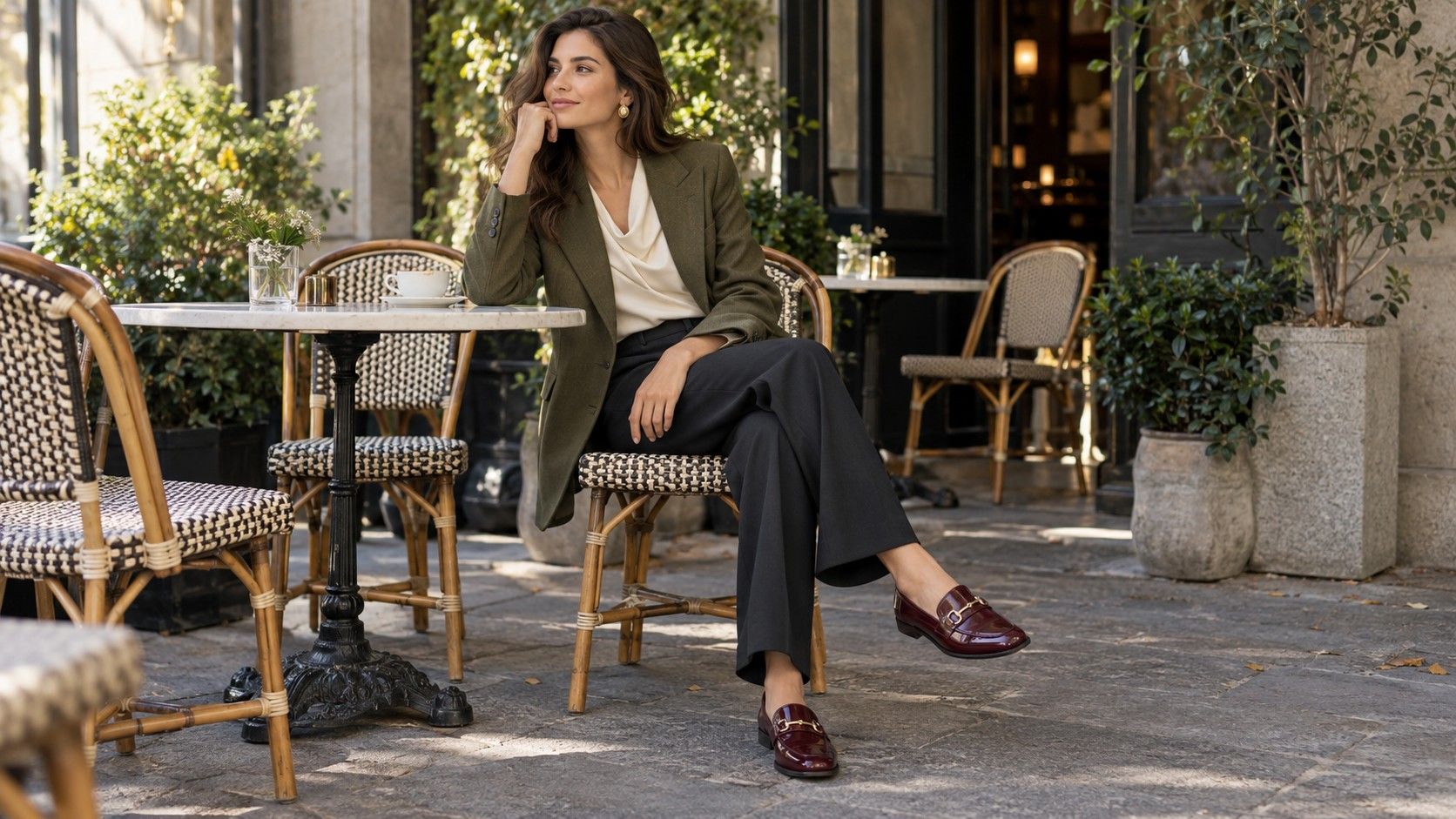
For an office with a casual dress code, try gray trousers, a plain white T-shirt and a burgundy jacket with distinct lapels. For a weekend, keep the trousers and shirt but use a dark red structured bag instead. The same color emphasis moves to an item that suits the activity. Let the day determine how much structure is comfortable.
Check the outfit while moving
A mirror gives you one view at one moment. Walk across the room, reach for a shelf and sit in the chair you normally use. Long earrings may touch a collar, an asymmetric hem may twist, and a stiff jacket may lift when you raise your arms. These are useful findings. They tell you whether to adjust the piece, change a neighboring garment or save it for another occasion.
Look at the back as well as the front. A clean jacket opening cannot compensate for a strap caught beneath a collar or a hem bunched over a bag. Take a short, private phone video if that is easier than using two mirrors. You are checking the behavior of the clothes, not inspecting your body for a supposed type.
Consider the outer layer before leaving. A statement collar that folds awkwardly inside a coat may work better with a lower neckline underneath. A long necklace can catch in a zip or disappear beneath a scarf. When the weather requires more coverage, move the emphasis to a bag, gloves or a strong coat closure rather than fighting the layers.
Keep a short note about the combination that worked: blue shirt, cream trousers, large silver cuff, small bag. Include the practical detail that mattered, such as sleeves staying above the cuff or a jacket allowing easy movement. That note gives you a repeatable outfit, while leaving room to change the color or degree of emphasis next time.