If you are exploring Soft Natural and Deep Winter together, the shopping advice can soon feel crowded: relaxed fabric here, strong contrast there, then a list of accessories that supposedly reconciles the two. It is easier to begin with one outfit and separate its decisions. Find a comfortable fit, compare dark color combinations you enjoy, and add a curved or tactile detail where it serves the clothes. These experiments can help you dress without requiring the labels to agree on every garment.
Use the labels to identify what you want to change
Soft Natural is a term within Kibbe discussions, while Deep Winter and Dark Winter appear in seasonal color discussions. They come from different frameworks and are not a single combined diagnosis. Treat the combination as a prompt for experimenting with clothes rather than an official set of styling instructions. It offers practical ways to explore the outfit concerns that may have brought you to the pairing.
Before choosing a garment, put the concern into ordinary words. Perhaps dark outfits feel too severe for your taste, or softer clothes seem to lose the clear color contrast you enjoy. Maybe the problem is simply that a favorite cardigan does not fit under your coat. Those questions are more actionable than asking whether a whole outfit matches two labels at once.
Keep color, fit and surface separate in your notes. A black shirt can be fluid or stiff; a deep blue jacket can have a rounded collar or an angular one. Darkness does not dictate construction, and a loose drape does not require a pale or muted color. Once you see those choices separately, you can change the part that bothers you without discarding everything else.
Check fit before trying to create softness
Start with a top and trousers that let you move easily. Look at the garment's behavior rather than searching your body for features that explain it. Can you reach forward without the back pulling? Does the waistband remain comfortable when seated? Does the neckline settle again after you raise an arm? A fit problem will still be there after you add a softer scarf.
Visual softness might come from a gently draped front, a knit surface or a curved neckline. Try one of those features in a garment with adequate room. A blouse that strains at the seam does not become more fluid because the fabric is thin. Conversely, a garment can have a relaxed feel without being several sizes larger than you need. Check the shoulder, sleeve and hem in motion.
Consider the whole layer combination. A comfortable shirt can become restrictive beneath a jacket with narrow sleeves, and a roomy cardigan can bunch under a close-fitting coat. Try the layers together with your usual bag. If the bag pulls the neckline sideways, a more stable neckline or lighter bag may help while preserving the surface or color you liked.
Choose one dependable base for comparison. Straight trousers with a softly draped top, or a simple dress with an open cardigan, can give you a steady starting point. These are outfit suggestions, not prescriptions for a named identity. Keep the version that meets your needs for sitting, walking and temperature before spending time on decorative adjustments.
Compare dark colors without changing everything else
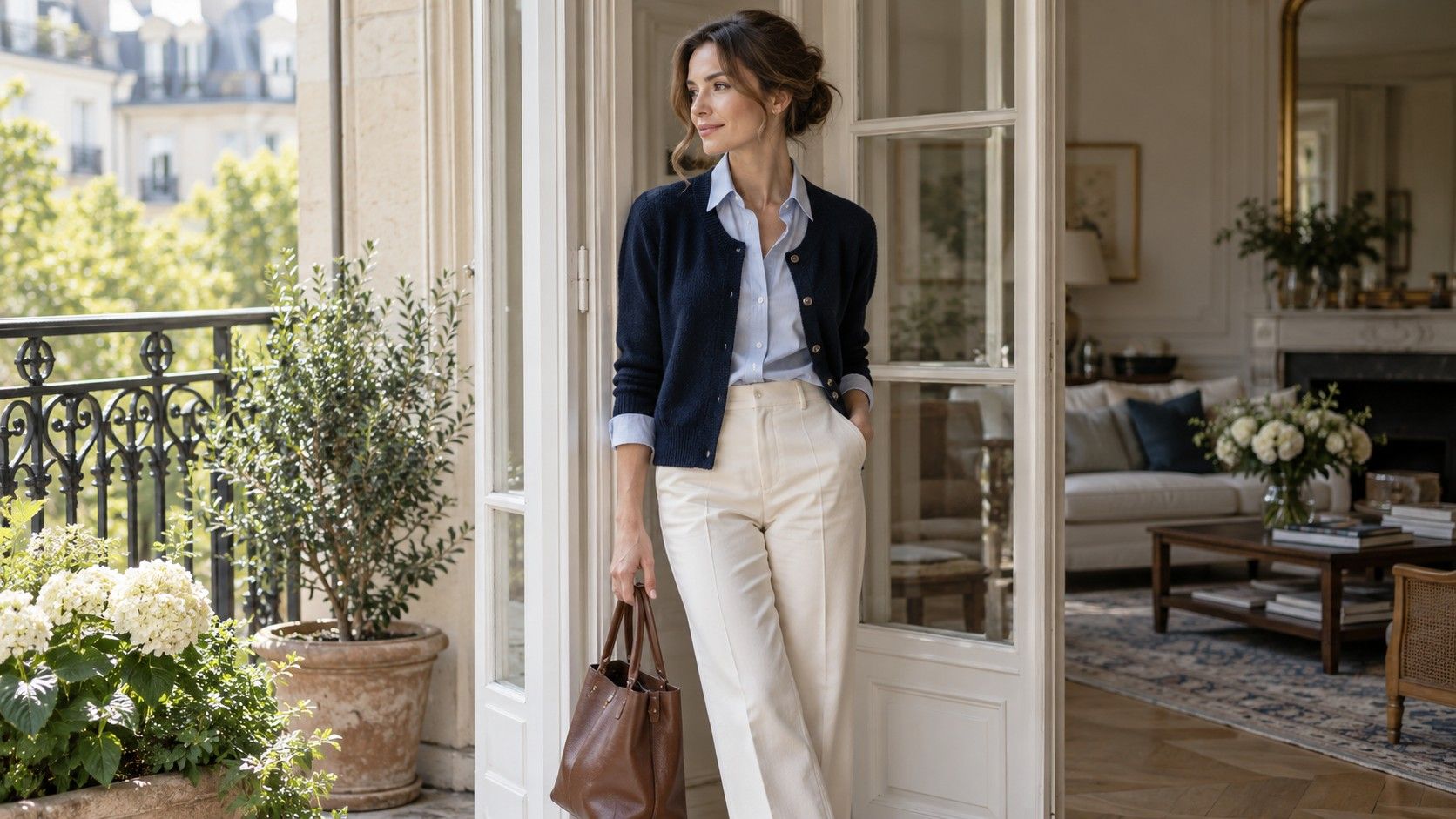
Clear dark combinations can carry interest through color relationships rather than additional decoration. Try deep navy with a lighter blue top, charcoal with a pale cool-looking neutral, or a dark plum with a plain dark trouser. These are possible combinations to inspect in your own wardrobe, not a definitive Deep Winter palette or an assessment of what suits you.
Begin with two colors you already wear together. Compare a lighter top and a darker top of similar shape with the same trousers. Ask whether you prefer a visible break between the pieces or a quieter transition. Keep the shoes and belt steady for the first comparison; otherwise their contrast can distract from what you are trying to see.
| Outfit question | Comparison to try | What to keep steady |
|---|---|---|
| Do I want a clear division at the waist? | A light top versus a dark top with the same trousers | Top shape, belt and footwear |
| Does the outfit need another color? | A dark bag versus a bag in a distinct color | Clothes, shoes and jewelry |
| Would a softer surface help? | A smooth knit versus a brushed knit in similar depth | Overall silhouette and accessory scale |
| Where do I want the focal point? | A colored scarf versus a colored bag | The plain base outfit |
Use reasonably steady light when looking at color. A strongly colored room or a changing phone exposure can make differences hard to judge. Check the clothes in person and consider how the combination works with your coat, not just how it appears in a cropped mirror photo. Your usual outerwear may occupy most of the visible outfit outdoors.
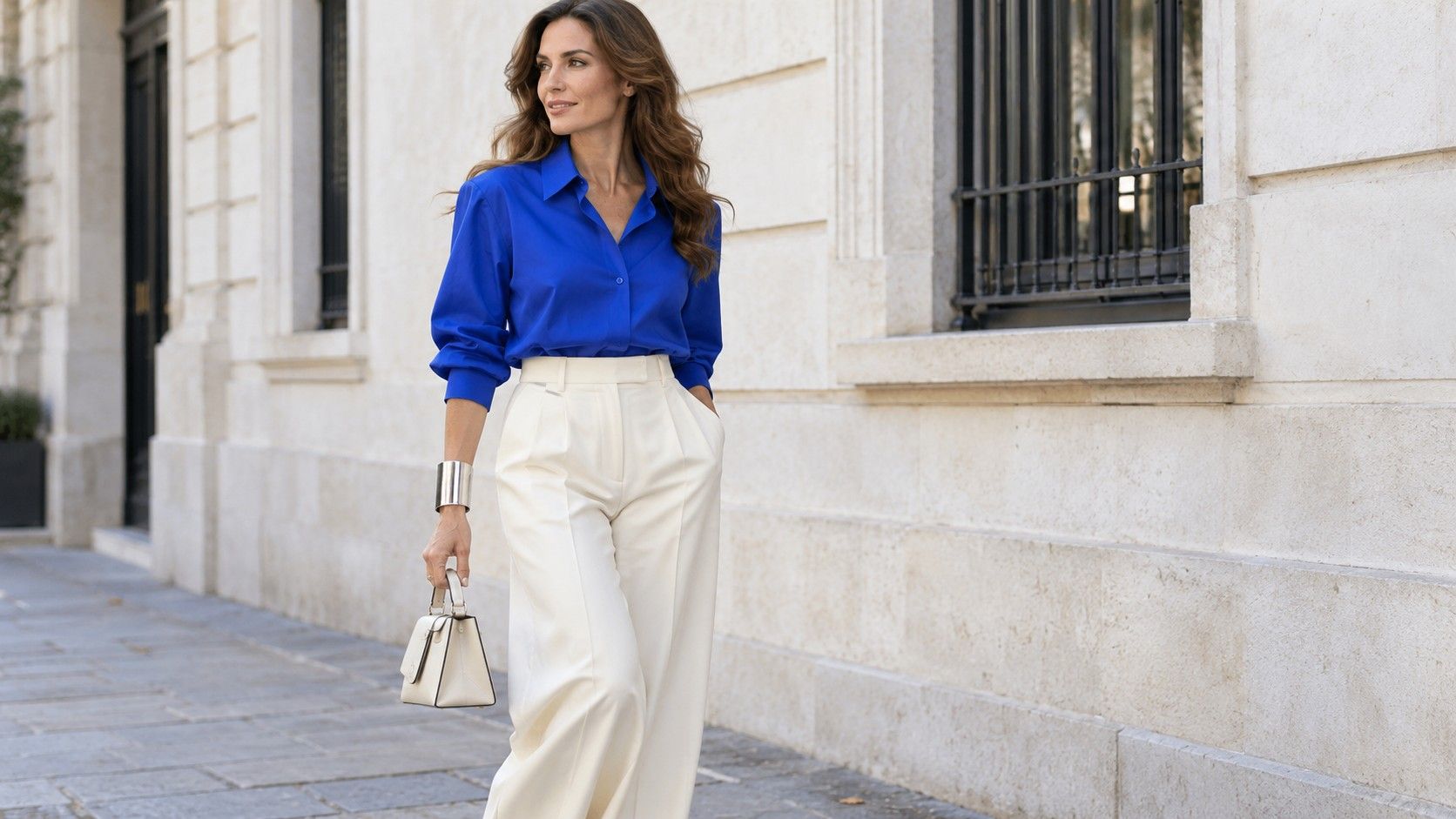
If a strong color feels like too much in a whole blouse, move it to a smaller area. A scarf, bag or visible sock can provide the contrast you enjoy while leaving the rest dark. If you like a large area of color, give it that space. Placement and amount are choices you can adjust without declaring a shade forbidden.
Bring a curve into one dependable accessory
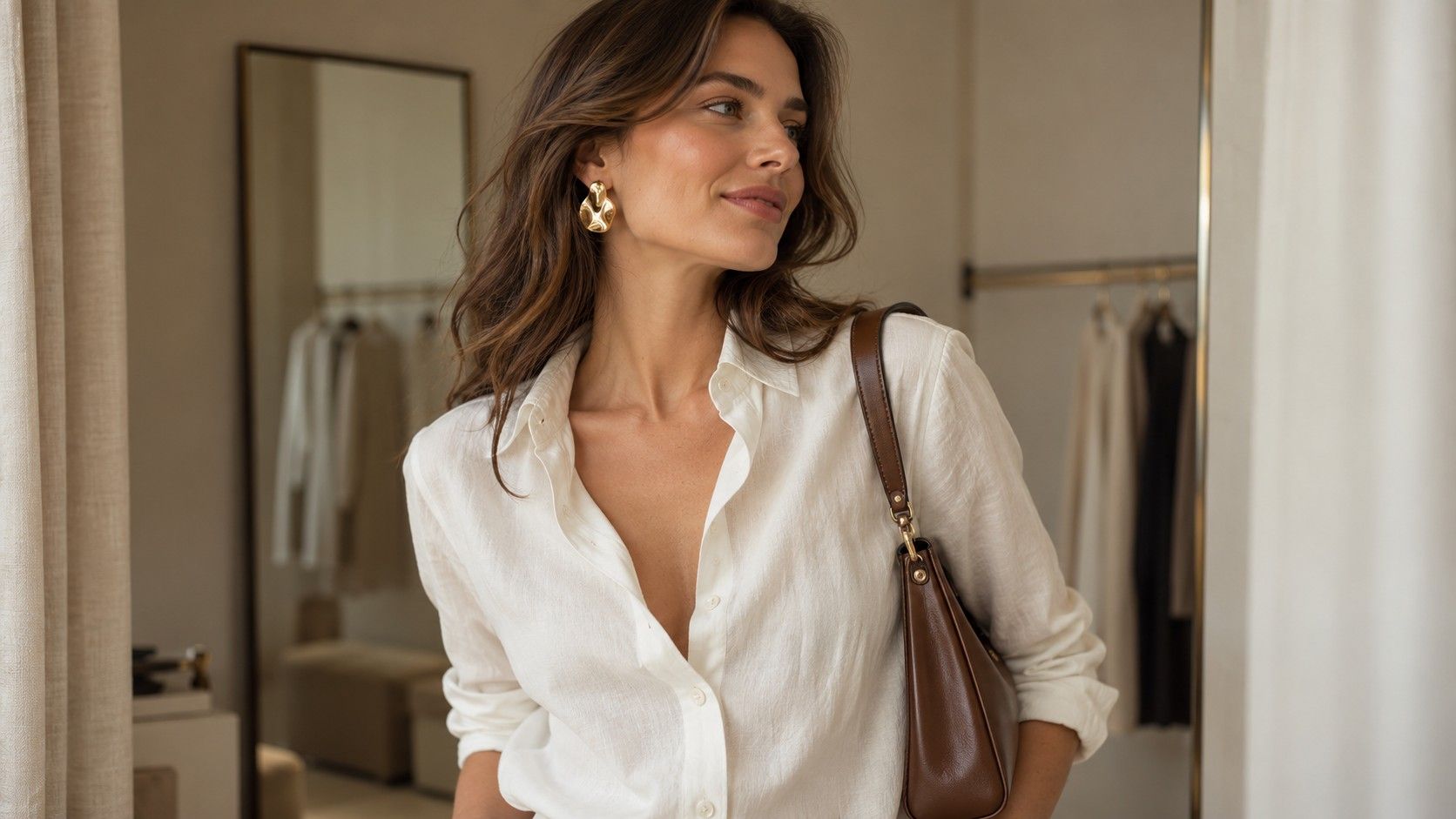
A curved accessory can add a different outline to a simple dark outfit. Consider a rounded bag handle, oval earrings or a cuff with a smooth arc. A structured bag can keep its practical shape while having curved corners, so you do not have to choose between a useful object and the softer detail that caught your eye.
Compare scale on the outfit you intend to wear. A small polished earring may be more visible than a larger matte piece because it reflects light. A dark rounded bag may blend with the coat, while a lighter one creates a clear focal point. Shape, finish and color contribute separately; there is no single correct accessory size hidden inside the two style labels.
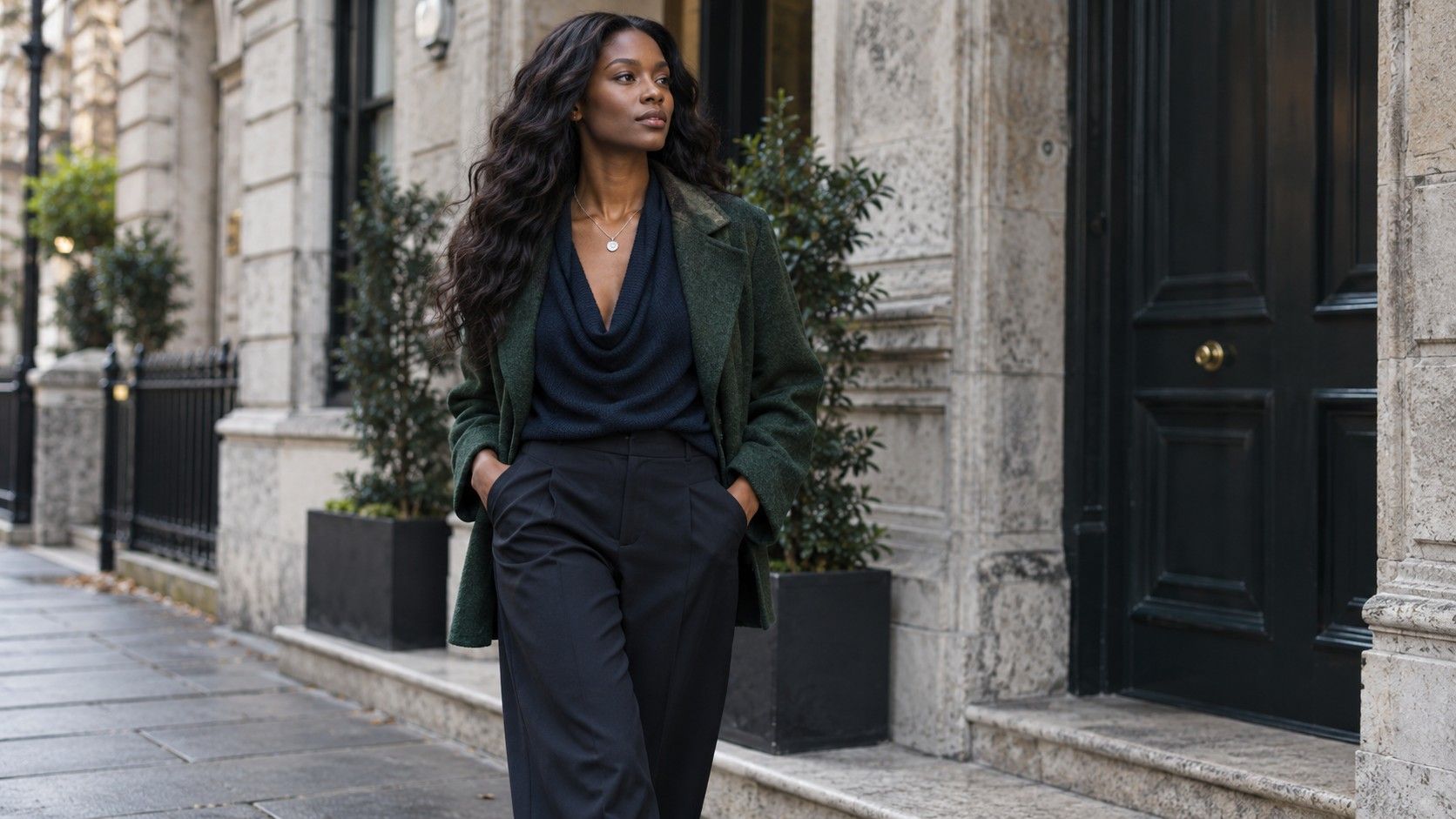
Try one curved detail before adding another. With a dark knit and trousers, an oval pendant may give you enough interest. A rounded earring can be an alternative if the pendant catches on the knit. If you like several pieces together, check the necklace against the neckline and the earrings against any scarf. Physical interference is a useful reason to edit.
Texture can provide another point of softness. A woven bag surface, a softly grained leather finish or a tactile knit scarf may interest you more than a curved outline. Choose a feature you actually enjoy using. You can combine a smooth angular shoe with a curved bag without needing to explain which style vocabulary takes priority.
Avoid treating accessories as a correction for your body. The bag does not have to balance a measurement or make you appear more like a category. It has to hold what you carry, sit comfortably and look pleasing with the clothes. Those straightforward criteria usually produce a more useful choice than a long list of supposed compatibility rules.
Finish the outfit for the weather you expect
In a seasonal color label, Winter does not mean that the outfit must be designed for cold weather. Keep the palette discussion separate from the forecast. A dark lightweight shirt may work on a mild day, while a warm coat may be necessary with any color combination. Start with the actual conditions and the amount of time you will spend outside.
For a cool commute, try a comfortable base layer, your dark trousers, a softly textured knit and a coat that fits over them. Put on the scarf before judging the neckline. If the scarf covers a decorative detail, decide whether that matters for the day. You may enjoy the detail indoors and let the coat and bag provide the outdoor interest.
On a wet day, choose footwear and an outer layer suited to the conditions before refining the accessory arrangement. A rounded bag that leaves your hands free may be more convenient than a delicate handheld option when carrying an umbrella. A washable knit may be more useful than a fabric you worry about throughout the journey. These are reasons to adapt the outfit, not evidence of a style mismatch.
For mild weather, retain the color relationship and reduce the layers. Deep trousers with a lighter top and one curved accessory can preserve the idea without a heavy cardigan. Fabric opacity, airflow and ease of washing may matter more than the seasonal name. Check the outfit seated and in motion just as you would a layered version.
Save one complete combination that works, including the shoes, coat and bag. A useful note might read: “dark blue trousers, lighter blue knit, rounded silver earrings, roomy charcoal coat.” Then add what you learned: the sleeves fit, the bag strap stays put, and the light top gives the amount of contrast you wanted. That is a repeatable outfit decision, whether the labels remain central to your style or gradually become less important.