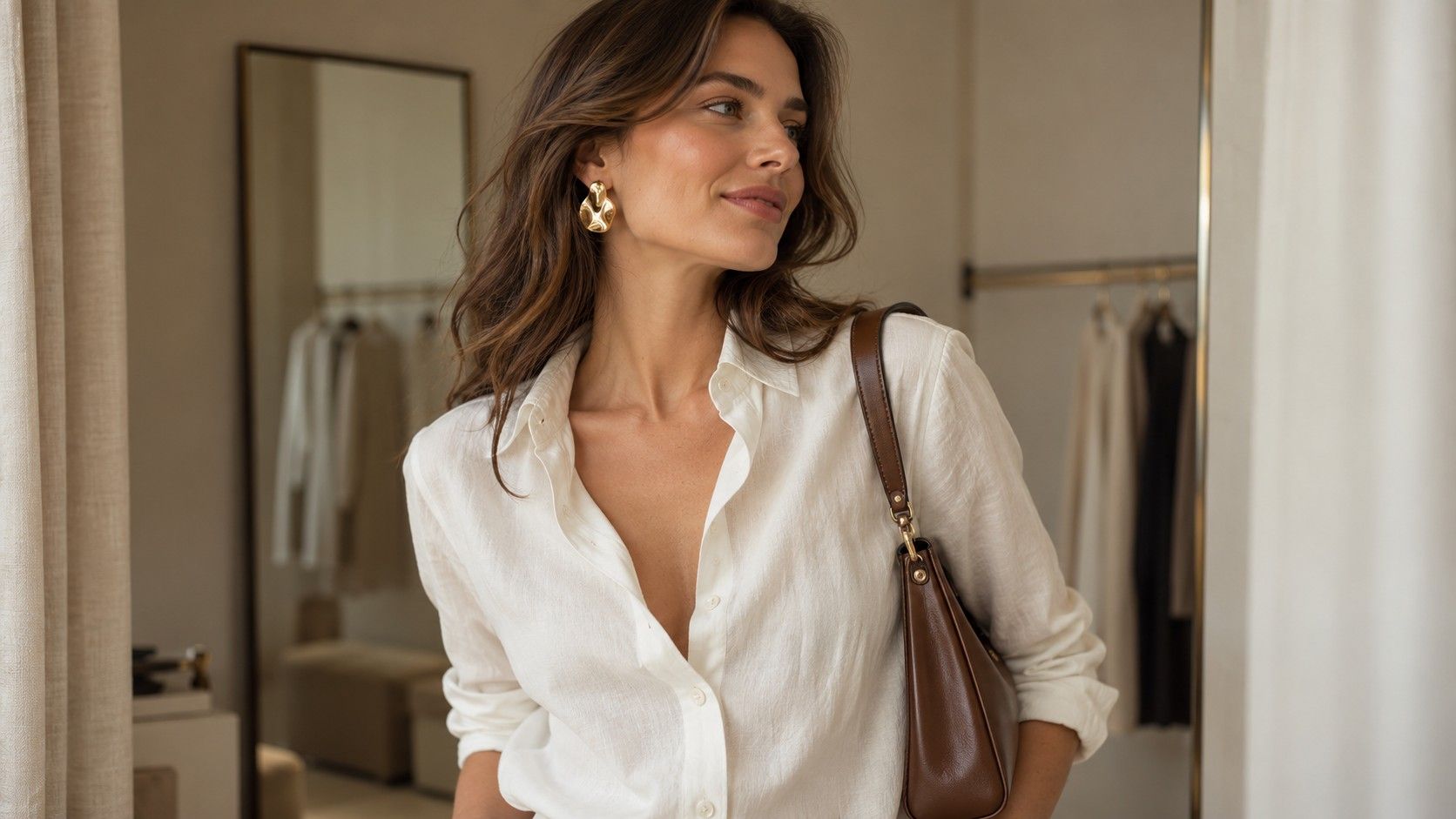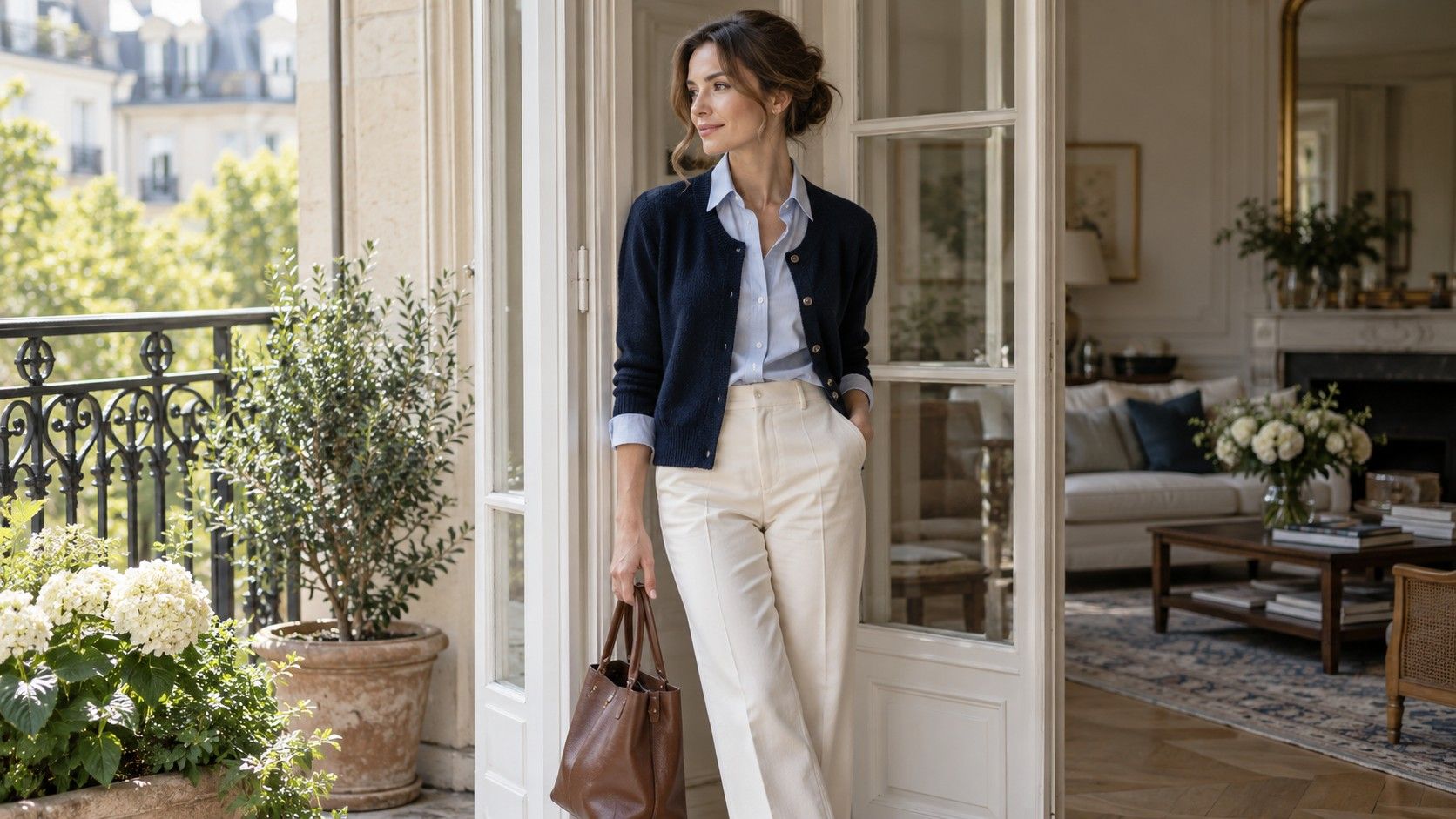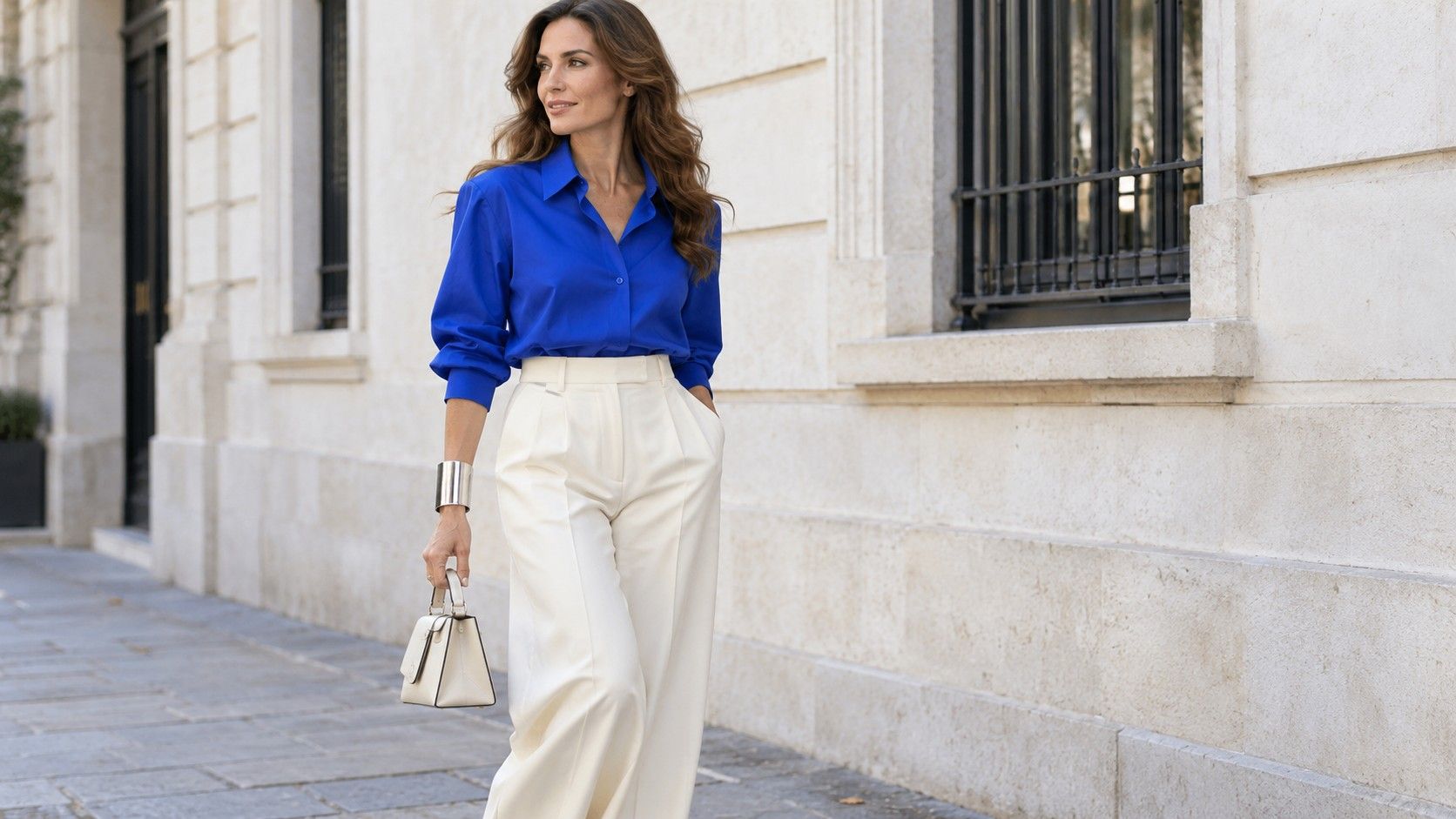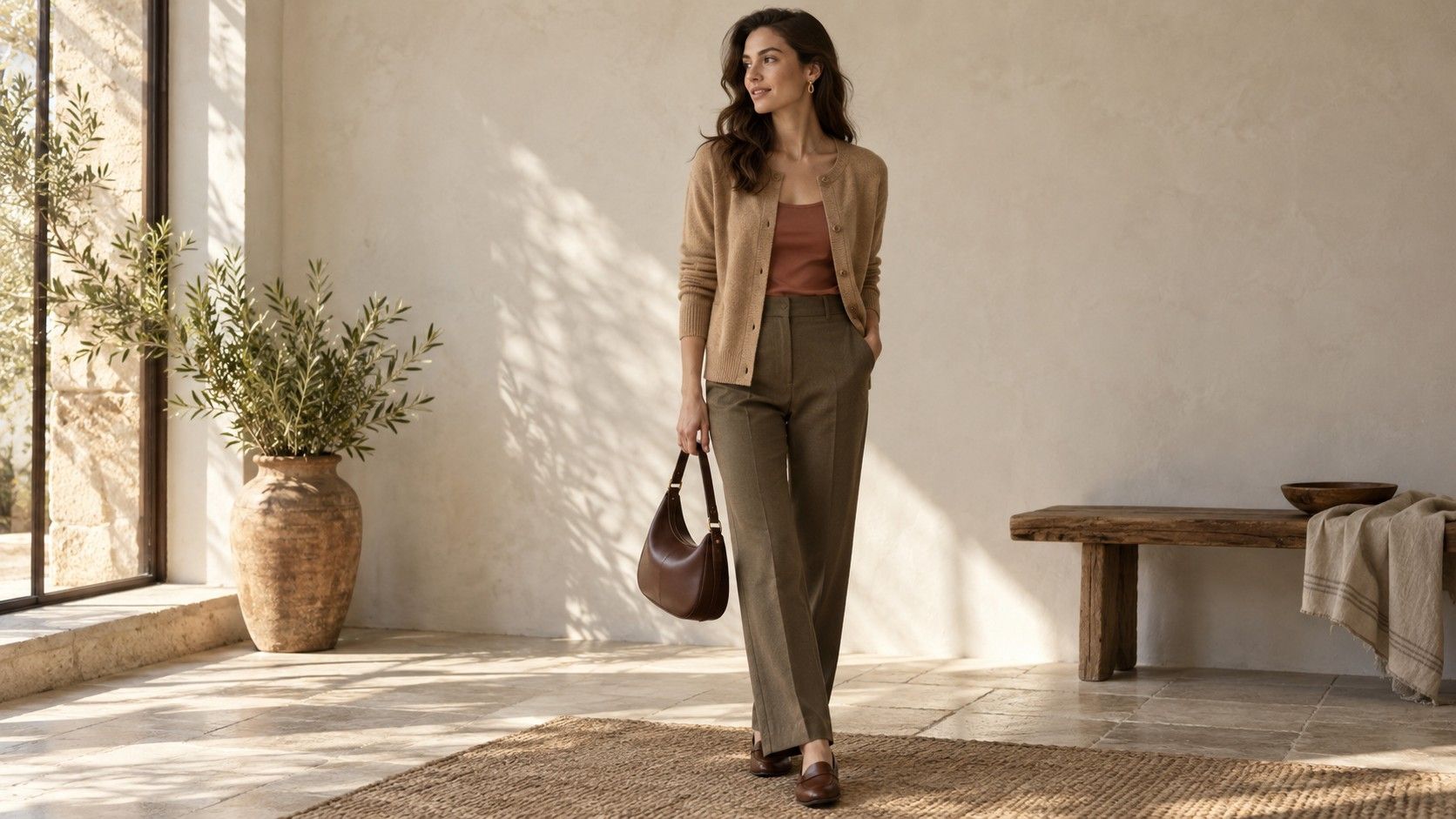
A softly shaped neckline and a muted olive cardigan can be an appealing starting point, but two style labels will not tell you whether the trousers pinch or the bag feels wrong. If you are exploring Soft Autumn and Soft Classic together, work with the clothes first. Use the colour vocabulary to describe shades you enjoy and the styling references to suggest details worth trying. The combination is an outfit experiment, not a new category you need to prove you belong to.
Start with clothes that sit comfortably
Begin with a pair of trousers and a top you can wear through an ordinary day. Sit down, reach across a table and raise your arms. The waistband should let you breathe comfortably, and the top should not require constant pulling back into place. A softly styled outfit can still use practical structure; the aim is to find garments that support your movements.
Check the junctions between pieces. A blouse may lie smoothly outside the trousers but gather into a thick fold when tucked in. Try a smaller tuck, an untucked length that clears the pocket openings or a different waistband. Keep the version that feels useful. A photograph of a tucked shirt cannot tell you how much fabric is sitting inside the trousers.
A softly shaped jacket can provide an easy outer layer, but compare constructions rather than searching for a prescribed cut. One jacket may have a gently rounded lapel and a relaxed fastening; another may create that softer impression through a supple fabric. Wear both over the top you plan to use. A comfortable jacket in isolation may become tight with a knit underneath.
Body proportions matter here through garment placement. Move a jacket hem above and below the trouser pockets, or compare two sleeve lengths. Notice whether the layers collide or leave a clear line. You are choosing where clothes meet on your body. Measurements and facial features are not needed to decide whether you enjoy a curved pocket or a muted green.
Keep colour constant for the first fitting comparison when possible. Trying a soft brown roomy blouse against a stark white fitted shirt changes too many things at once. If you prefer the brown version, the reason could be fit, fabric texture, colour or all three. Compare similar shapes before making the colour choice carry the entire explanation.
Keep muted warm color from becoming flat
A palette built from subdued warm colours can look rich or indistinct depending on the differences between its pieces. Try olive with a lighter oatmeal knit, or a muted terracotta top with deeper brown trousers. These are suggested combinations rather than compulsory Soft Autumn shades. Use the versions you like and already own, since colour names cover a wide range of actual fabrics.
Look at depth as well as hue. If a cardigan and trousers are almost identical in lightness, their boundary may disappear at a distance. That can create a pleasing continuous effect. If you want more definition, introduce a lighter top or a deeper belt. A little difference at one junction may be enough; you do not need several strong contrasts.
Texture can separate similar colours. A brushed cotton shirt, a fine rib knit and smooth woven trousers each handle light differently. Put two pieces side by side, then wear them together in daylight. A colour pairing that looks clear on hangers may change when folds create shadows. Check the outfit as a moving arrangement rather than a row of flat swatches.
Be careful with the idea that softness means everything must be faded. A muted outfit can still have a dark anchor, a visible seam or a clearly outlined accessory. Try a deep brown shoe beneath olive trousers, or a matte bronze-coloured buckle on a plain belt. If the accent dominates more than you want, reduce its size or move it lower in the outfit.
Compare a plain edge with a curved detail
A curved detail can introduce softness without filling the outfit with decoration. Compare a plain crew neckline with a shallow scoop, or a straight pocket opening with a rounded patch pocket. Keep the surrounding clothes quiet enough to see the difference. The curved version may appeal; the plain edge may give you the cleaner finish you wanted.
Neckline depth and width are separate choices. A broad shallow opening leaves a different area of space from a narrow deeper one. Try each with the bra and outer layer you actually use. Check that the neckline stays comfortable when you bend forward and that the jacket does not push it out of position. An attractive outline is less useful if it needs monitoring.
Sleeve ends and hems can supply the same kind of variation. A narrow gathered cuff adds a little movement; a plain cuff gives a more defined stop. Wear the cuff under your jacket and check whether it bunches. A gently curved shirt hem may work untucked, while a straight hem can create a clear horizontal edge. Neither shape is assigned to a particular body.
Let one detail be visible before adding another. A blouse with a shaped neckline, decorative cuffs and a rounded collar may have more activity than you want, even in a quiet colour. Start with the feature you most enjoy and simplify its neighbours. This makes the difference between deliberate softness and an outfit that feels fussy to wear.
Use jewelry and bags to adjust the mood
Jewellery can change the mood of the same knit without changing its fit or colour. Try a small smooth hoop, a rounded drop and a fine pendant separately. Look from a conversational distance. One may provide a small point of light, another a clear shape. Accessory scale depends on the neckline and background as well as the size of the piece itself.
Warm-toned metal is one option beside muted warm clothing, but there is no need to replace jewellery you love. Compare a soft gold-coloured finish, silver-coloured metal and a mixed piece against the actual top. Surface and contrast may matter as much as metal colour. A bright polished piece often draws a different amount of attention from a brushed one.
Choose the bag according to its daily job, then compare its outline. A soft bag can echo a fluid blouse, while a structured bag gives the same clothes a firmer edge. A rounded handle is a small detail that may connect with a curved neckline. Test the strap with the bag loaded, because its hanging position can change once a bottle and notebook are inside.
A brown bag need not match brown shoes exactly. Compare whether the colours share enough depth or warmth to feel related, and whether you like their surfaces together. Smooth shoes with a softly textured bag can add interest. If one object looks disconnected, repeat a small amount of its colour elsewhere before buying a matching replacement.
Comfort still decides which accessories stay. Check earring weight, bracelet movement near a keyboard and the way a necklace rests against the knit. A larger hollow shape may feel lighter than a tiny solid one. Remove anything that pulls, snags or irritates. A restrained outfit does not become more successful by making its wearer tolerate an inconvenient finishing detail.
Build a small repeatable outfit group
Choose a useful base rather than a complete new capsule: one trouser, two tops, an outer layer and shoes suited to your routine. For example, start with warm brown straight trousers, an oatmeal knit, a muted green blouse and an olive jacket. Use these as a set of roles, substituting your preferred colours and cuts. The clothes should already fit comfortably together.
Wear the knit with the trousers first and decide whether you want a pendant or an open neckline. Then replace it with the blouse and reassess rather than transferring every accessory automatically. The blouse may have enough detail at the collar. A compact earring can finish that combination without competing with the fastening or making the neck area feel crowded.
For a more relaxed day, replace the jacket with a soft cardigan and choose a practical flat shoe. For a neater version, return the jacket and try a structured bag. Keep the changes small enough that you know what altered the effect. An outfit group becomes useful when several versions work for real activities, not merely because all the pieces look harmonious on a rail.
Check fabric movement before repeating a combination. The blouse may slide under the jacket while the knit catches against its lining. A trouser hem may sit well over one shoe and collect at the ankle over another. Record these pairings specifically. “Brown trousers with loafers” is a better note than assuming every shoe in the same colour will work.
If your search began with the phrase soft autumn soft classic, turn that broad interest into a short list of preferences: muted colour differences, a supple jacket, a curved neckline or one smooth accessory. Keep only the details you enjoy using. You can wear a brighter scarf or a sharper bag tomorrow without having to reconsider the rest of your wardrobe.