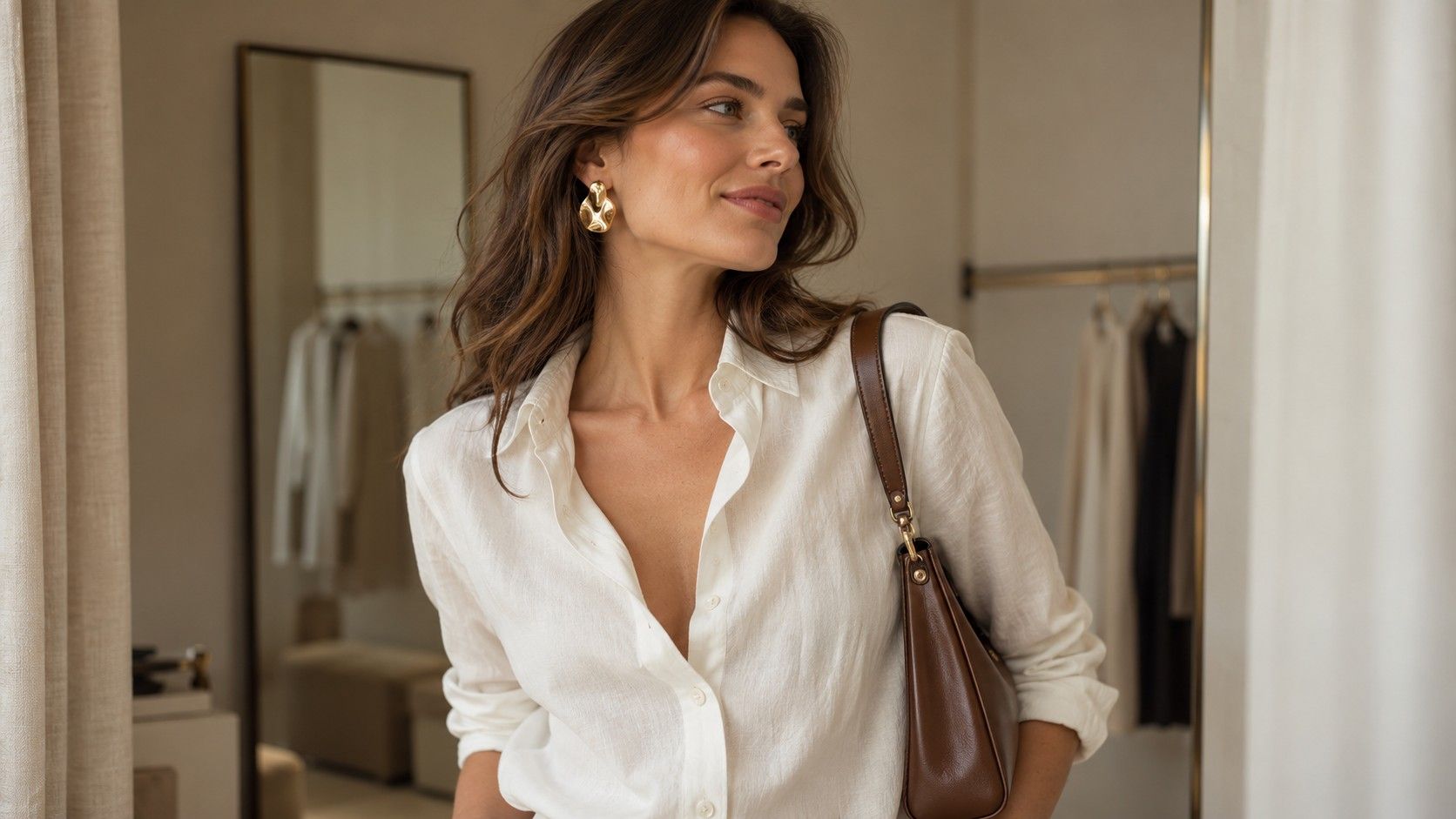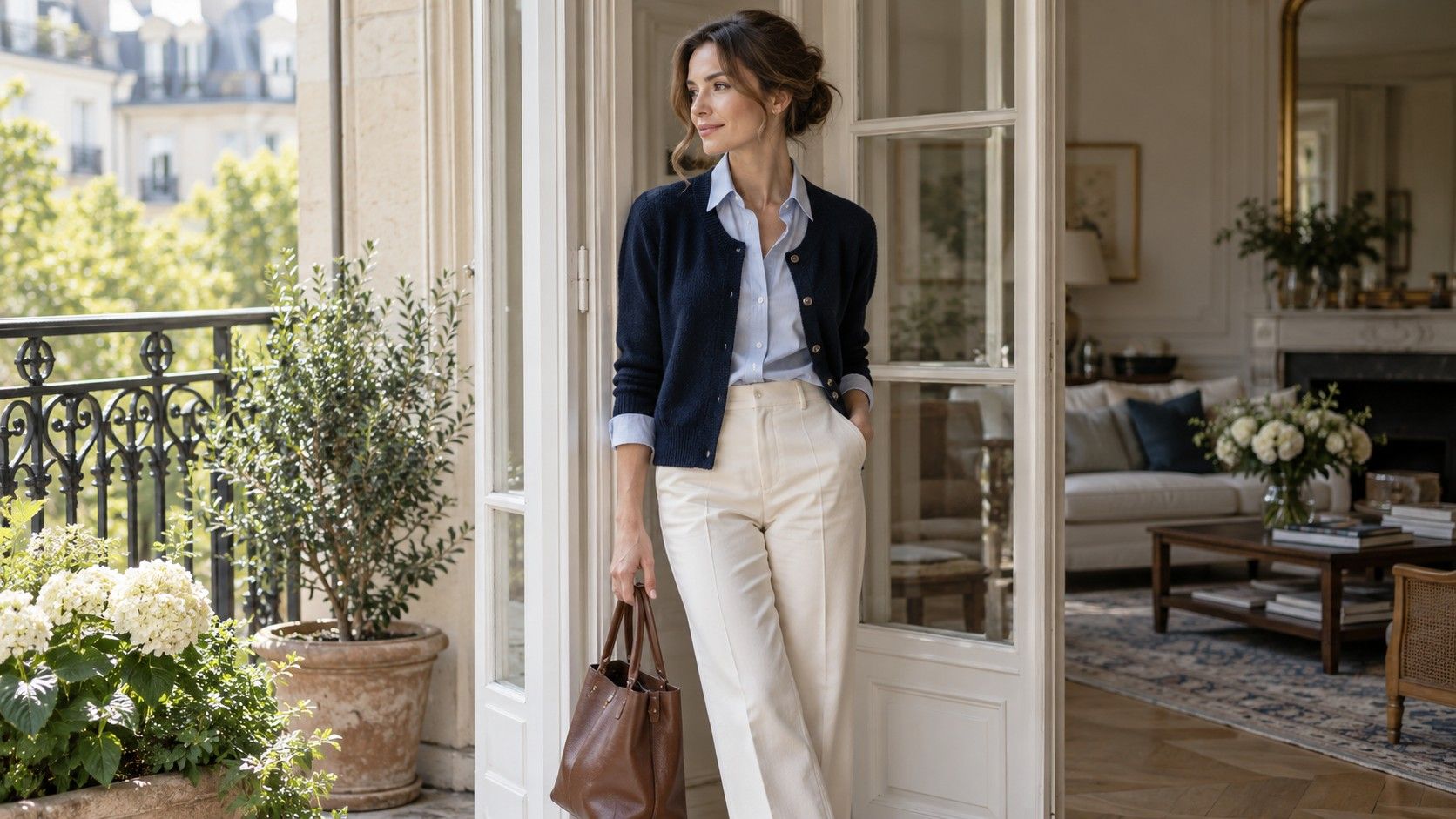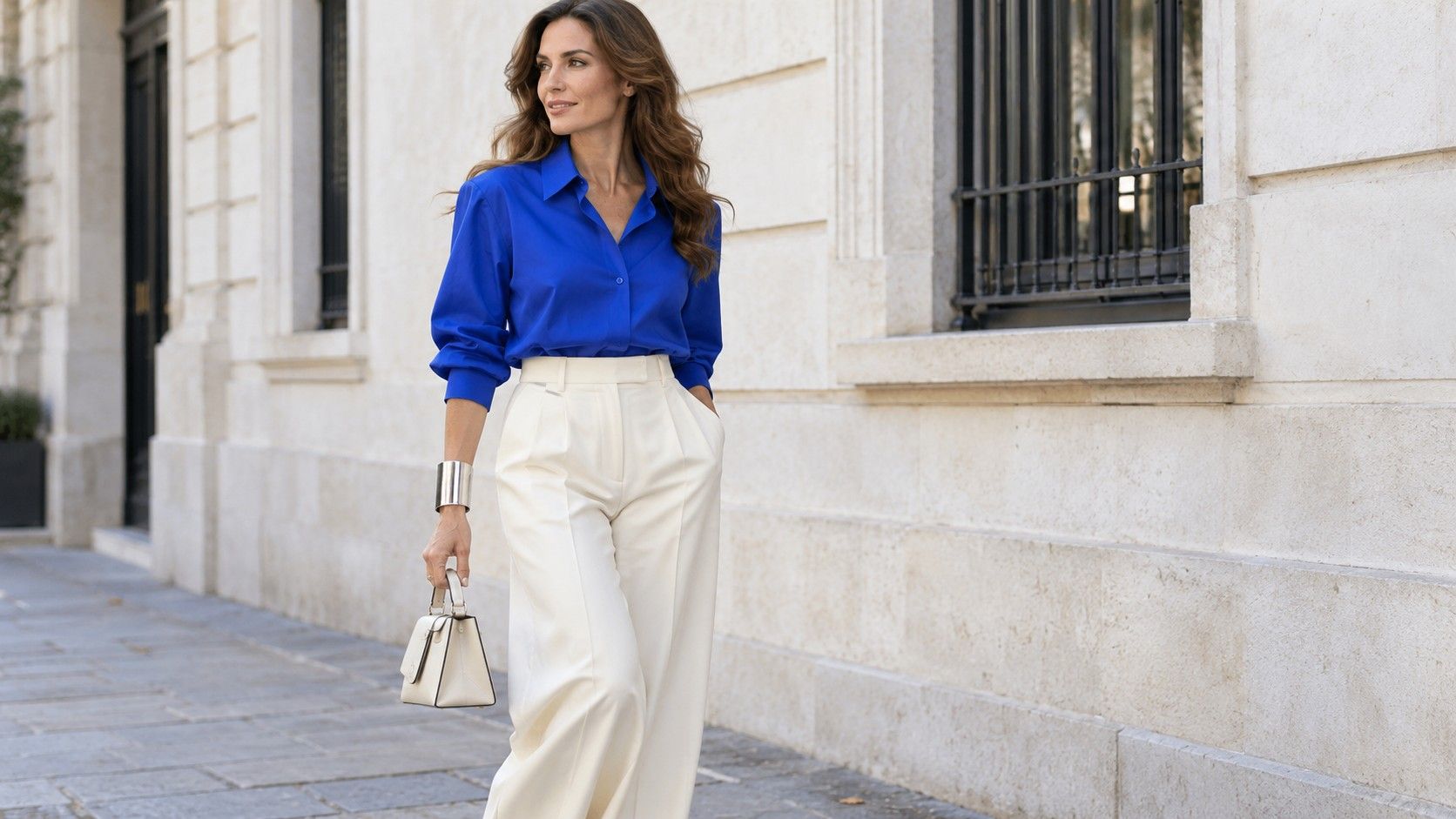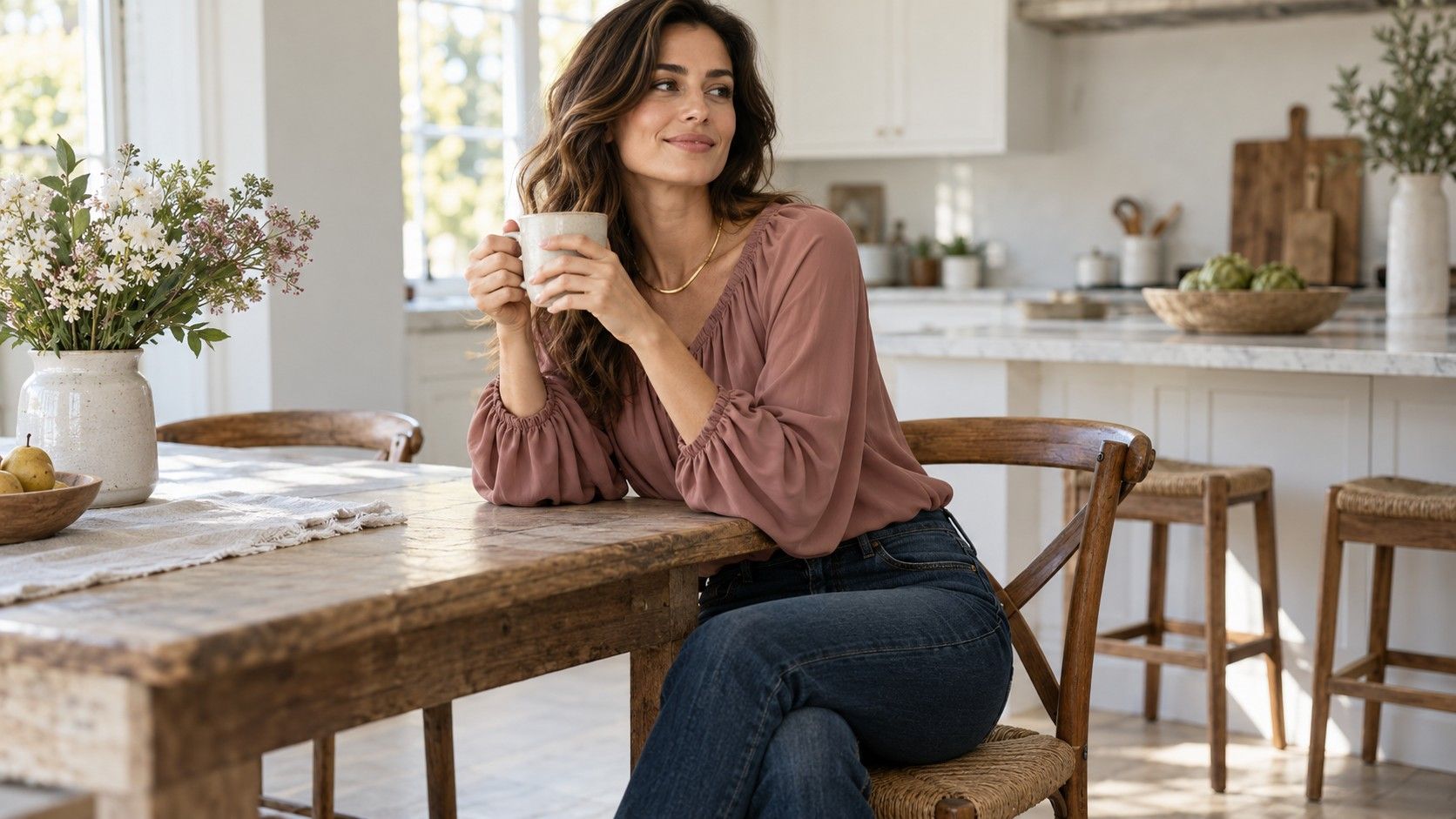
A softly gathered sleeve or a curved necklace can change an ordinary outfit without turning the whole wardrobe into occasionwear. If romantic style essence interests you, start with the detail you actually want to wear: a fluid neckline, a tactile surface, a rounded edge. You can explore those choices with jeans, office trousers or a familiar cardigan. The useful question is how much softness you enjoy in the clothes, and whether the result still works when you sit, walk, carry a bag and get on with the day.
Choose softness that lets you move
Softness can mean several things. A fabric may feel pleasant against the skin, fall in loose folds or have a visually blurred surface. These qualities do not always arrive together. A brushed knit may look gentle while feeling too warm; a smooth woven blouse may drape beautifully but restrict your shoulders. Decide which quality you want before replacing a piece that otherwise works.
For a first comparison, take an outfit you already trust and change the top. Try a fluid blouse with the same trousers and shoes you wear with a crisp shirt. Notice the way the blouse settles at the waist and neckline. Then reach forward, raise your arms and sit down. A fabric that moves attractively while standing should also allow the movements your day requires.
Gathering and draping deserve the same practical attention. A small gathered section at the shoulder can add interest without affecting the rest of the shirt. Dense gathering at the cuff may become awkward under a coat. A wrap neckline might need a discreet adjustment if it shifts when you bend. These are construction questions, not signs that the visual direction is unsuitable for you.
Choose room rather than pressure when you want a close-fitting shape. A stretchy top should return comfortably after you move; a seam should not have to strain to create a curved effect. If the garment only works while you stand perfectly still, look for another cut with a similar detail. You can preserve the idea while improving the fit.
Change one edge of an everyday outfit
Edges are a useful place to begin because a modest alteration can be easy to see. Compare a straight shirt collar with a softly rounded neckline, or a plain cardigan with one that has a small scalloped border. Keep the rest of the outfit familiar. You are finding out whether you enjoy that particular finish, rather than proving that every item needs decorative trim.
For work, a blouse with a narrow gathered neckline might sit under a simple jacket and straight trousers. At the weekend, a softly edged knit can go with denim and trainers. The same preference appears in both outfits, but neither needs a formal skirt, heeled shoe or special occasion. Soft romantic outfit details can stay small enough to wear while doing ordinary errands.
| Existing outfit | One detail to try | Practical check |
|---|---|---|
| T-shirt and jeans | A softly draped cardigan | Does the front stay clear when you carry a bag? |
| Shirt and office trousers | A gently gathered neckline | Does it sit comfortably under your usual jacket? |
| Plain knit and skirt | A curved metal pendant | Does it settle without catching on the knit? |
| Simple dress and flat shoes | A narrow, softly tied scarf | Can you tie it securely without constant adjustment? |
Use the detail where you want attention. A neckline finish draws the eye toward the upper part of the outfit; a curved shoe fastening or shaped bag shifts the interest elsewhere. There is no need to place the detail near your face if you prefer a quieter neckline. A shoe or bag can carry the idea just as clearly for your own purposes.
If several edges compete, simplify one area. A scalloped collar, ruffled cuff and lace hem can produce a busier effect than any of the pieces creates alone. Try the collar with plain sleeves, or keep the cuff and choose an undecorated neckline. This is a way to control the amount of detail, not a rule against wearing several decorative pieces together.
Give a fluid fabric a dependable layer
A flowing blouse can feel easier to wear with a layer that stays in place. Try it under an open cardigan or a jacket with enough room through the sleeves. Let the blouse provide movement while the outer layer provides warmth and useful pockets. The contrast between the two surfaces can make each easier to appreciate.
Check the length relationship before deciding the outfit needs a new item. A blouse hem hanging just below a jacket may create a visible extra line; tucking it can give a cleaner finish. Either can work. Compare both while wearing the intended trousers, since their waistband height changes the amount of fabric left on show. Choose the version that stays comfortable after sitting.
Fluid fabric also needs consideration at the bag strap. A heavy shoulder bag can pull a loose neckline sideways or trap a draped fold. Try the bag on before leaving. A lighter bag, a different strap position or a more stable neckline may solve the problem without changing the visual mood. The useful result is an outfit you can carry things in.
For cooler weather, keep softness in a detail that survives the outerwear. Curved earrings may remain visible above a plain coat, while a gathered cuff disappears beneath its sleeve. A smooth scarf with loose folds can be easier to manage than a delicate blouse collar under several layers. Think about what will actually be seen and felt during the part of the day that matters most.
Try a curve without filling every space
Curved accessories are a low-commitment way to explore the look. A rounded pendant, oval earring or softly shaped bag can sit beside simple clothes you already own. Begin with one accessory in a size you find comfortable. Its outline matters, but so do its weight, surface and position against the garment.
Compare two pieces on the same top if you can. An oval earring with a polished surface may feel more noticeable than a larger matte one because it reflects more light. A fine chain may nearly disappear against a textured knit. Those differences help explain why “small” and “subtle” do not always mean the same thing. Look at the entire outfit from an ordinary conversation distance.
Repetition can make a detail feel connected without requiring a matching set. A curved earring and the rounded corners of a bag may be enough. If you prefer a necklace as the focal point, leave the earrings quiet for one version and compare a second version with more visible earrings. You can choose a stronger effect for dinner and a simpler one for a busy day.
Avoid turning the accessory choice into a claim about your character. A curved piece does not make the wearer gentle or romantic, and choosing a sharp cuff does not cancel your interest in softness. These are visual tools available to anyone who enjoys them. Mix them according to the outfit rather than forcing every object into one descriptive family.
Keep the details you are willing to care for
The appealing blouse on the hanger has to join your real laundry routine. Read the care label before buying, especially on gathered, embellished or loosely woven pieces. Check whether the garment needs hand washing, reshaping or drying flat, and whether that is a task you want. A simpler washable version can be a better everyday choice even when the more delicate one looks lovely.
Inspect the places that meet daily friction: cuffs on a desk, trim beneath a bag strap and a necklace against fine knitwear. Loose threads, catches and awkward fastenings can turn an attractive detail into a source of annoyance. If you already own the piece, a small repair or a different accessory pairing may make it easier to use.
Build one dependable formula before adding more. For example, choose comfortable trousers, a fluid top and one curved accessory, then identify the layer and shoes that make it suitable for your week. Try a second version using the same trousers and a softly textured knit. You now have two outfits connected by preference, without buying a collection of similar decorative tops.
Keep a short note about what made the outfit work. “Neckline stays clear of the coat; sleeves fit under cardigan; pendant visible on plain fabric” will help on a rushed morning. If you liked the appearance but avoided wearing it again, record the inconvenience honestly. That detail may belong in an occasional outfit instead of your everyday rotation.
Romantic style essence can remain a useful phrase for the softness you enjoy. It does not have to become a requirement for every purchase. Keep the rounded edge, drape or tactile finish that earns its place, and let the rest of the wardrobe do its practical work.