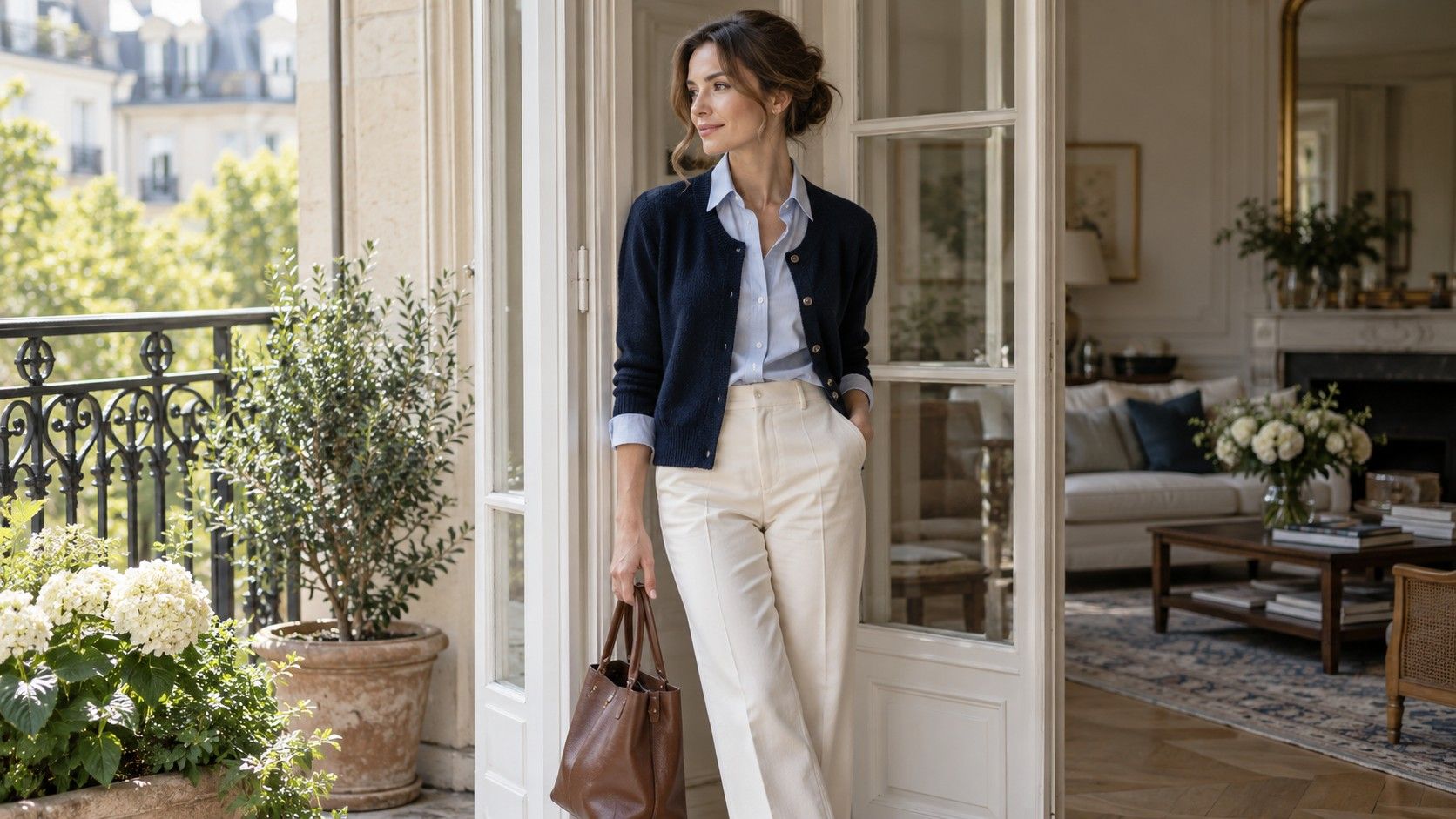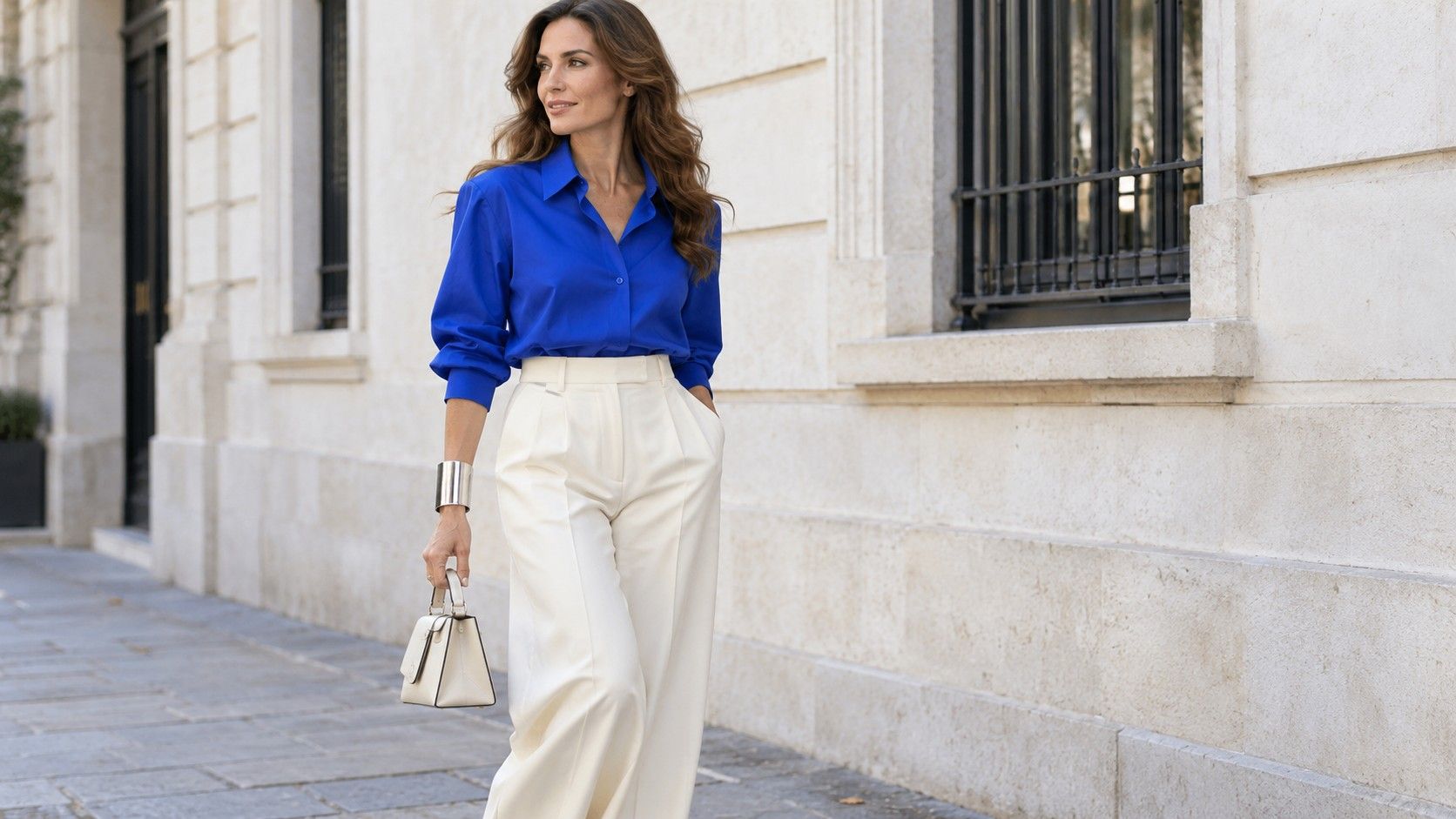
A softly rumpled shirt can look relaxed on purpose, yet the same shirt with several equally loose pieces may leave you adjusting the outfit all day. Texture becomes easier to use when you decide which garment should lead, where you want definition and what feels pleasant to wear for more than a photograph.
Begin with texture you enjoy touching
A textured outfit spends the day against your skin, over your shoulders and beneath your hands. Start there. Rub a sleeve gently along your inner forearm, bend your elbow and notice the neck opening. A sweater can have a beautiful uneven surface and still be too scratchy for a long day. Wearing a comfortable layer beneath it may solve the problem, provided the extra warmth and neckline suit you.
Texture describes several different things. Linen can show irregular threads; corduroy has visible ridges; a loose knit has spaces between stitches; brushed cotton has a soft surface. These qualities do not all produce the same outfit. Compare two items you own and name the difference you actually see or feel. That is more helpful than buying something simply because it is described as natural.
The natural style essence label can offer vocabulary for relaxed shapes and tactile surfaces, but it cannot determine your fabric preferences. A smooth cotton shirt may feel more comfortable than a chunky wool knit. Synthetic blends can also provide the texture you want. Read the care label and judge the actual cloth instead of assuming fiber content alone will tell you its softness, durability or appearance.
Begin with one familiar garment, such as ribbed knitwear or washed denim. Pair it with a smooth piece so you can see its surface clearly. A ribbed oatmeal top against plain navy trousers is an easy comparison. If both items have a strong texture, look closely at the join around the waist: the combination may feel interesting, or simply busier than you intended.
Control how many relaxed elements you combine
A loose shirt, wide trousers, soft bag and slouchy shoes can make a lovely relaxed outfit. They can also leave you wishing for a clearer stopping point. Count the features that soften the outline: dropped shoulders, rippling hems, rounded accessories and fabrics that collapse. You do not need to remove them all. Change one and see whether the outfit becomes easier to read.
Try a washed linen shirt over straight cotton trousers with a simple leather belt. The shirt supplies movement and surface detail; the trouser seam and belt give it boundaries. For a softer version, keep the trousers and swap the belt for a bag with a firm opening. You can move the defining detail away from your waist if belts feel restrictive or inconvenient.
Volume is separate from texture. A fitted ribbed top may have a highly visible surface, while an oversized smooth shirt may be visually quiet but very loose. If a combination feels bulky, try changing the amount of fabric before abandoning the texture. A thinner knit under a roomy jacket can preserve the tactile effect while making sleeves easier to bend.
The following comparisons are useful when you like the individual clothes but the whole outfit feels less deliberate than you hoped. They are starting points for a fitting-room experiment, with no requirement to choose the more structured option.
| When this feels awkward | A change to try | What changes |
|---|---|---|
| Loose knit with wide soft trousers | Try a straighter trouser | Keeps texture and changes the outline |
| Linen shirt with a collapsing bag | Try a bag with a firm opening | Adds a boundary away from the body |
| Thick cardigan beneath a tight coat | Try a fine knit and textured scarf | Moves bulk out of the sleeves |
Give the outfit one clear edge
An edge can be as small as a crisp placket on a casual shirt. It can also be a rolled cuff, a straight trouser hem, a visible neckline or the clean outline of a bag. Choose a place your eye can settle. With a soft cardigan over a plain top, a neat neckline may provide enough definition; there is no need to add a belt solely to make the outfit seem finished.
Check what happens to that edge after ordinary movement. A sleeve roll that loosens every few minutes may need a smaller fold or a different shirt. A half-tuck can create a useful break, but if it pulls uncomfortably when you sit, leave the shirt out and try another hem length. The detail should survive the day without constant repairs.
Grooming the garment matters here. Remove a loose thread, check for pilling and look at the shape of the cuffs. Deliberately worn denim and accidental damage are different choices, even when both show roughness. Decide which marks you enjoy and which make the clothes feel neglected. Follow the care instructions before steaming or pressing a fabric with a pronounced surface.
Accessories can offer that clear edge without looking formal. A canvas tote with a firm base, a smooth wooden bangle or a simple buckle can sit comfortably beside linen and knits. Be specific about the effect: a broad bracelet adds scale, while a glossy finish adds surface contrast. Neither item needs to prove that you belong to a style category.
Keep fabric weight right for the weather
Natural texture outfits often bring to mind thick knits and layered jackets, but texture is available at lighter weights too. A loosely woven cotton shirt, a fine slubbed jersey top or a thin seersucker layer can show surface interest in warm weather. Hold a fabric up to the light and consider whether you are comfortable with its transparency before building an outfit around it.
For a warm journey followed by a cool indoor room, keep the texture in a removable layer. A light cardigan over a smooth sleeveless top gives you two workable versions of the outfit. Check that the cardigan fits in your bag without becoming a nuisance. A layer that is pleasant while worn but awkward to carry may be the wrong choice for a day of errands.
In cold weather, test a textured sleeve inside your coat. Thick cuffs and raised seams can bunch at the wrist; a roomy coat may accommodate them better than a narrow sleeve. Alternatively, use a fine knit under the coat and put the heavier texture in a scarf. Check the scarf against your neck before leaving, especially if you will wear it for several hours.
Weather also changes maintenance. A long trouser hem can pick up rain and street dirt, while a loosely knitted sleeve may catch on a bag zip. Choose a hem that clears the ground in the shoes you will actually wear. Where snagging is likely, a tighter surface may save you repeated repairs without changing the relaxed character of the outfit.
Make texture work with muted or clear color
Muted colors can show texture gently because neighboring shades sit quietly together. Try a sage knit with faded blue denim or a taupe overshirt with cream trousers. If the result seems indistinct, change one surface: a smoother trouser, a darker shoe or a clearer shirt collar may supply enough separation. Adding more beige is not the only way to make the pieces relate.
Clear colors work with texture too. A bright red ribbed top can sit beside simple dark jeans; a green textured bag can add interest to a plain white shirt. Keep the surrounding shapes quiet when you want the color and surface to remain visible. A multicolored loose knit already carries several decisions, so a smooth solid-color bottom can make dressing easier.
Color can also connect surfaces that differ. A navy cotton jacket and blue woven bag need not have identical textures to feel related. Repeat a shade in a small area, then check whether you actually like the connection in daylight. Dark textured cloth can look flat from a distance, while pale raised stitches may cast visible shadows. The fabric sample and the full outfit can give different impressions.
Keep a few combinations that work for your real week: a soft shirt with straight trousers for work, a textured knit with smooth joggers at home, or a light woven jacket over a plain dress. Note which detail gives each outfit its finish and which care tasks it requires. A useful wardrobe includes textures you want to wear again after the novelty of the surface has passed.