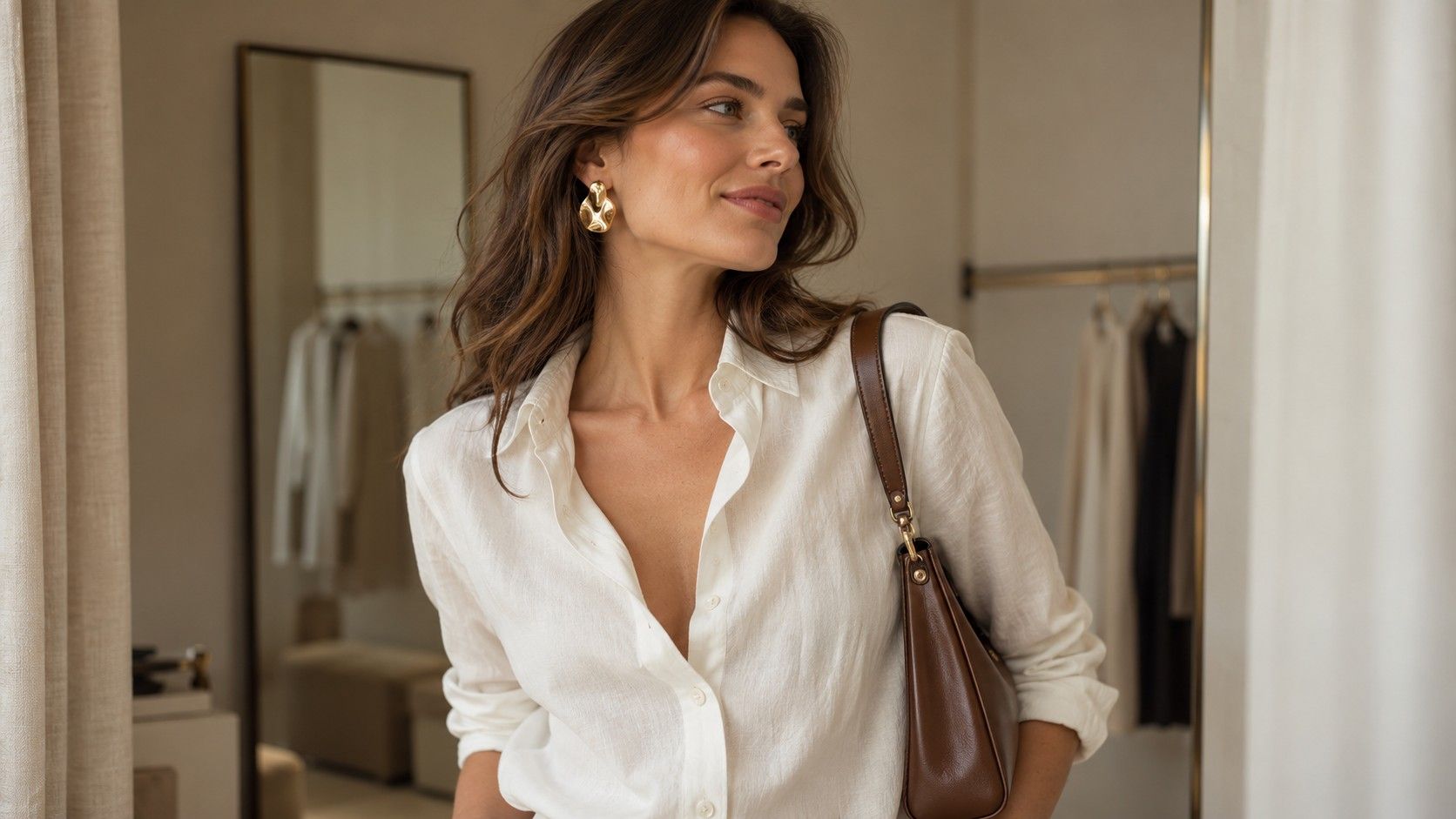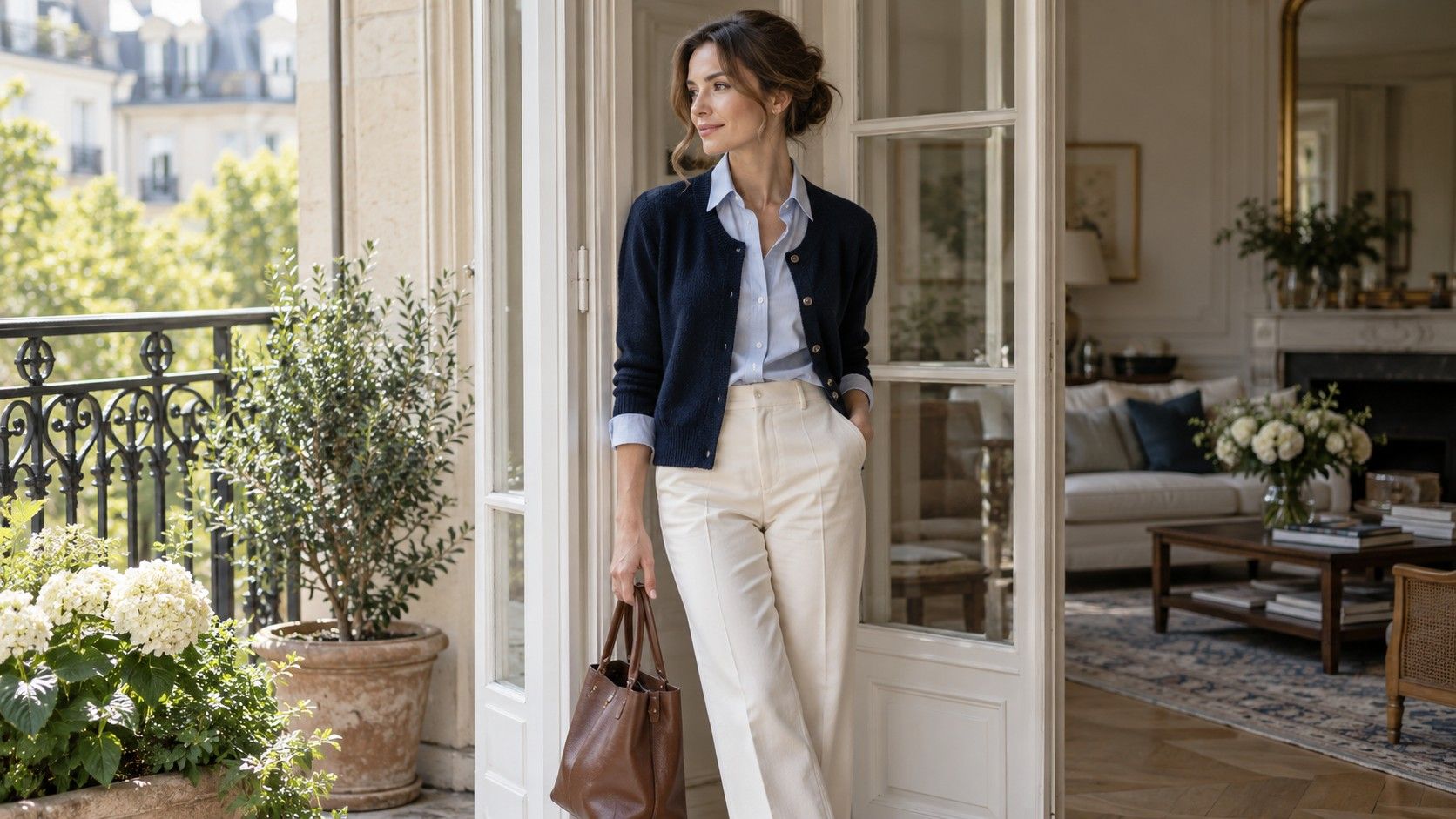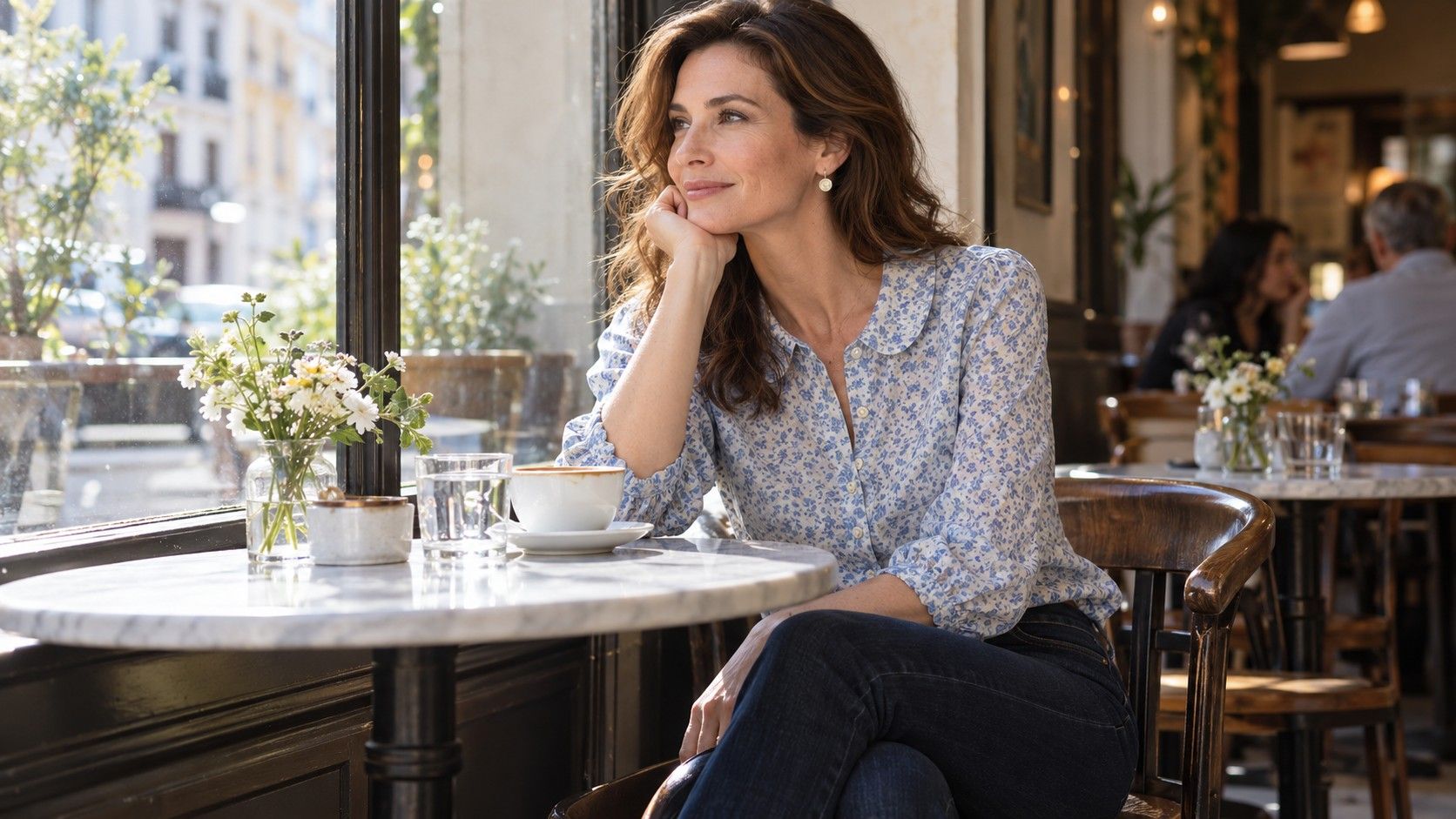
A small rounded collar, tiny repeated print or neat decorative button can add interest to clothes you already wear. Ingenue style essence is sometimes discussed in language that confuses decoration with age or personality. You can leave that association aside and look directly at the garments. This is a practical way to explore small-scale details: choose one, consider how it reads from a normal distance, and combine it with the clothes that suit your actual day.
Make the label about decoration
Use “ingenue” as an optional description for a visual detail you like, rather than a description of who you are. A rounded collar can appeal because of its shape; a small floral print can appeal because of its rhythm. Neither choice tells anyone your age, temperament or experience, and neither requires a particular face or body.
Translate the label into a garment feature before shopping. “Small-scale outfit details” might mean a narrow scalloped edge, closely spaced buttons or a compact repeated motif. Those descriptions help you locate the piece and compare it with what you own. A broad label alone can lead to buying a whole styled look when only one small feature caught your attention.
Separate detail size from garment size. A roomy shirt can carry a fine print; a substantial coat can have small rounded buttons. You do not have to shrink the whole outfit to enjoy a compact motif. Choose the fit and amount of fabric for comfort and purpose, then decide what decoration you want on that surface.
Keep your own response in the decision. If a collar feels too decorative for the office but enjoyable with jeans, that is useful context. If you like a tiny print but dislike bows, keep the print. An interest in this vocabulary does not commit you to every detail that someone else places beneath the same heading.
Look at small patterns from a useful distance
Prints change as you step back. A tiny blue flower on a pale ground may appear as a soft overall texture across a room, while a similarly sized dark dot remains distinct because of its contrast. Examine the individual motif close up, then look again at the whole garment from a few steps away. Both views matter when deciding how you want the outfit to read.
Compare density as well as size. Widely spaced little flowers leave visible plain fabric between them; a dense scatter can create a more continuous patterned surface. A blouse with a small but tightly packed motif may look busier than one with larger, widely separated shapes. Choose according to the effect you enjoy, without assuming that the smallest motif will always be the quietest.
| Pattern choice | What changes the effect | A comparison to make |
|---|---|---|
| Tiny floral | Space between flowers and contrast with the ground | Loose scatter versus dense scatter with the same plain trousers |
| Small dots | Dot spacing and sharpness of the color difference | High-contrast dots versus close-toned dots |
| Fine check | Line thickness and number of colors | A two-color check versus a more complex one |
| Textured knit | Size and repetition of the stitch | A fine repeated texture versus a smooth knit in a similar color |
Try the pattern beside a plain piece you wear often. A printed shirt with dark denim gives you a clearer comparison than a completely new patterned outfit. If you want a smaller area, use a scarf or a bag lining that appears when you open it. Enjoyment does not depend on making the detail visible to everyone in the room.
For photographs, avoid deciding from one tightly cropped image. A close view can exaggerate a tiny motif that barely registers in the whole outfit. Keep a full outfit photo as a memory aid if you find it useful, but return to how the fabric looks and feels in person. Screens can change both color and apparent texture.
Give one rounded detail room to show
A rounded collar is easier to evaluate when the rest of the neckline stays simple. Try it with a plain cardigan, comfortable trousers and familiar shoes. Leave off a necklace for the first version so you can see whether you like the collar itself. Then add an accessory only if you want another point of interest.
The same approach works with a small bow or shaped button. A narrow tie at a blouse neckline may provide enough detail on its own. If the tie keeps catching on a zip or sliding underneath your coat, try a flatter knot or choose the detail elsewhere. A curved bag fastening can carry the visual idea without anything around your neck.
Scale is relative to the surrounding clothes. A small collar can disappear under a bulky jacket, while a compact brooch may stand out sharply on a smooth dark knit. That does not make either piece wrong. Decide whether you want a discreet discovery or a clear focal point, then give it an appropriate background.
Repeat a shape sparingly if you want the outfit to feel connected. Rounded shirt buttons and a softly curved bag may already provide enough repetition. You can add round-toed shoes if you enjoy the result, but there is no obligation to echo the outline everywhere. One slightly different shape can make a familiar outfit more interesting to wear.
Adjust the sweetness through color and surface
A small decorative feature can produce different impressions depending on the fabric around it. A rounded collar in crisp cotton looks different from the same outline in lace or a softly brushed fabric. Before deciding that a detail is too sweet for you, see whether another surface changes the balance in a way you prefer.
Color offers another adjustment. A tiny floral in navy and cream can feel quieter than the same motif in several bright colors; a pale collar against a dark top creates a clear outline. These are examples of color relationships, not instructions tied to a personal color category. Start with shades that already connect with your shoes, coat and other clothes.
To reduce the amount of decoration, pair a detailed blouse with plain trousers and a smooth bag. To make the detail more noticeable, choose a simple background with a clear color difference. Neither direction is more correct. The useful question is whether the result has the level of visual activity you want for that occasion.
Keep texture and comfort separate in your notes. A lace edge might look appealing but feel rough where it meets your neck. A fine knit may be soft but catch on your ring. You can seek a lining, a different placement or another fabric while retaining the small-scale idea. There is no reason to tolerate irritation to preserve a visual category.
You can also add contrast through a practical piece you already own. A little patterned blouse with plain jeans and sturdy shoes may feel easier for everyday wear than the blouse with an equally decorative skirt. The point is to give the garment a useful setting, not to correct it or make it acceptable through a prescribed balance.
Make the details work through an ordinary day
Before calling an outfit finished, put on the coat and bag you will actually use. Small collars can bunch under a scarf, decorative cuffs can catch beneath a fitted sleeve, and a tiny fastening may be fiddly when you are rushing. Check these places at home. A detail that remains comfortable after layering is more likely to become part of your regular wardrobe.
For a desk day, consider what touches the table and keyboard. A narrow cuff with a secure button may be easier than a loose tie at the wrist. For errands, check that a crossbody strap does not sit directly over a raised embellishment. These small decisions help a decorative garment behave like a useful garment.
Care requirements count too. Check the label and inspect how the trim is attached. If the piece needs a laundry routine you will avoid, a simpler version may get more wear. A shirt with a neat printed motif can offer a different kind of detail from one with fragile sewn-on decoration. Choose according to the work you are willing to do.
Try a repeatable formula: one small-scale feature, one plain supporting garment and footwear that suits the day. That could be a tiny-check shirt with dark jeans and loafers, or a rounded-neck knit with straight trousers and trainers. Use pieces you own for the first version. The formula is a starting point you can relax, not a limit on how much decoration you are allowed.
After wearing it, save a useful observation rather than a rating of yourself. “The collar stayed flat,” “the print worked with two cardigans,” or “the wrist tie was inconvenient” tells you what to repeat. Ingenue style details earn a place through that kind of specific enjoyment. You can wear them at any age, in any combination that feels right for your clothes and your day.