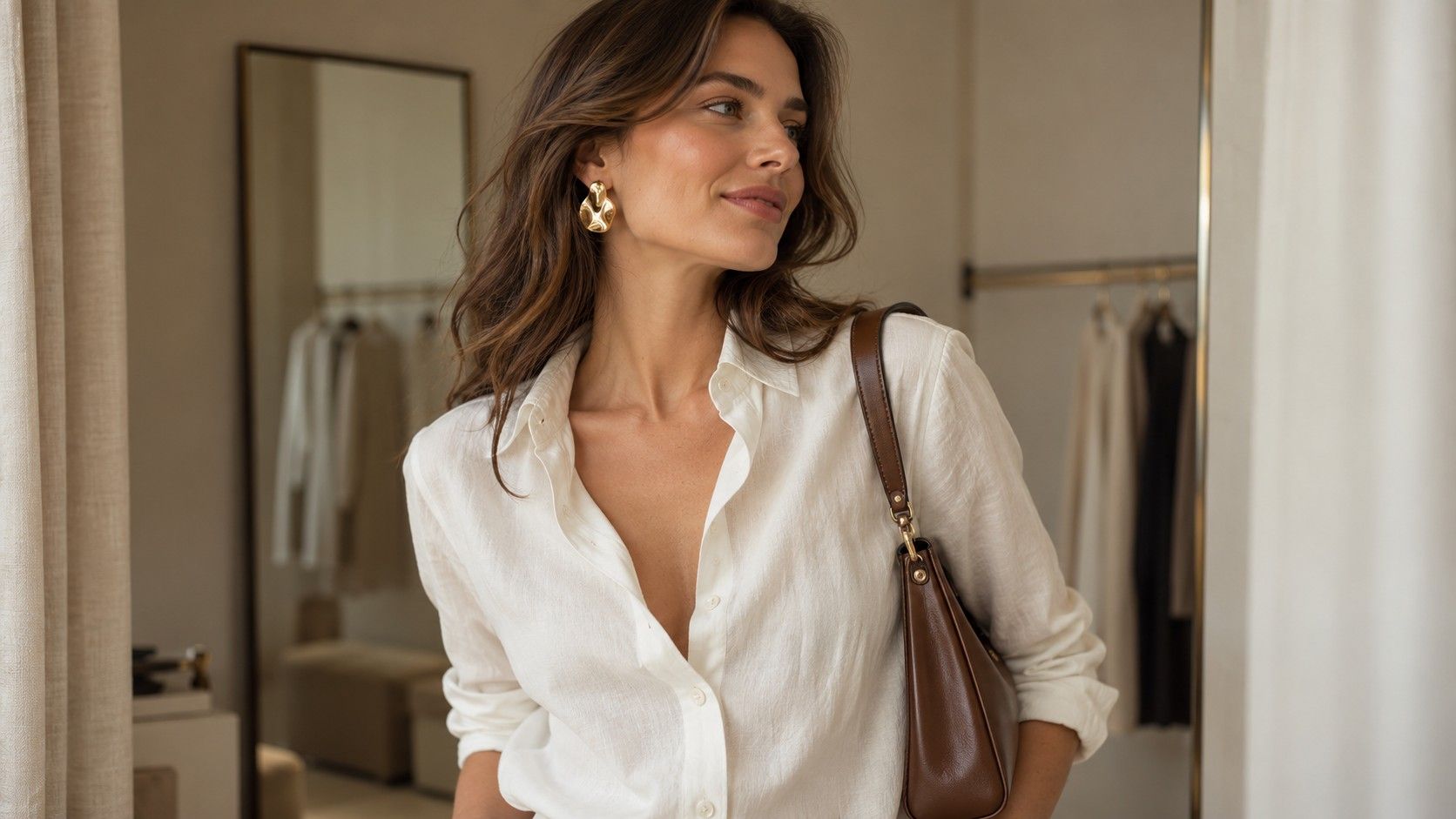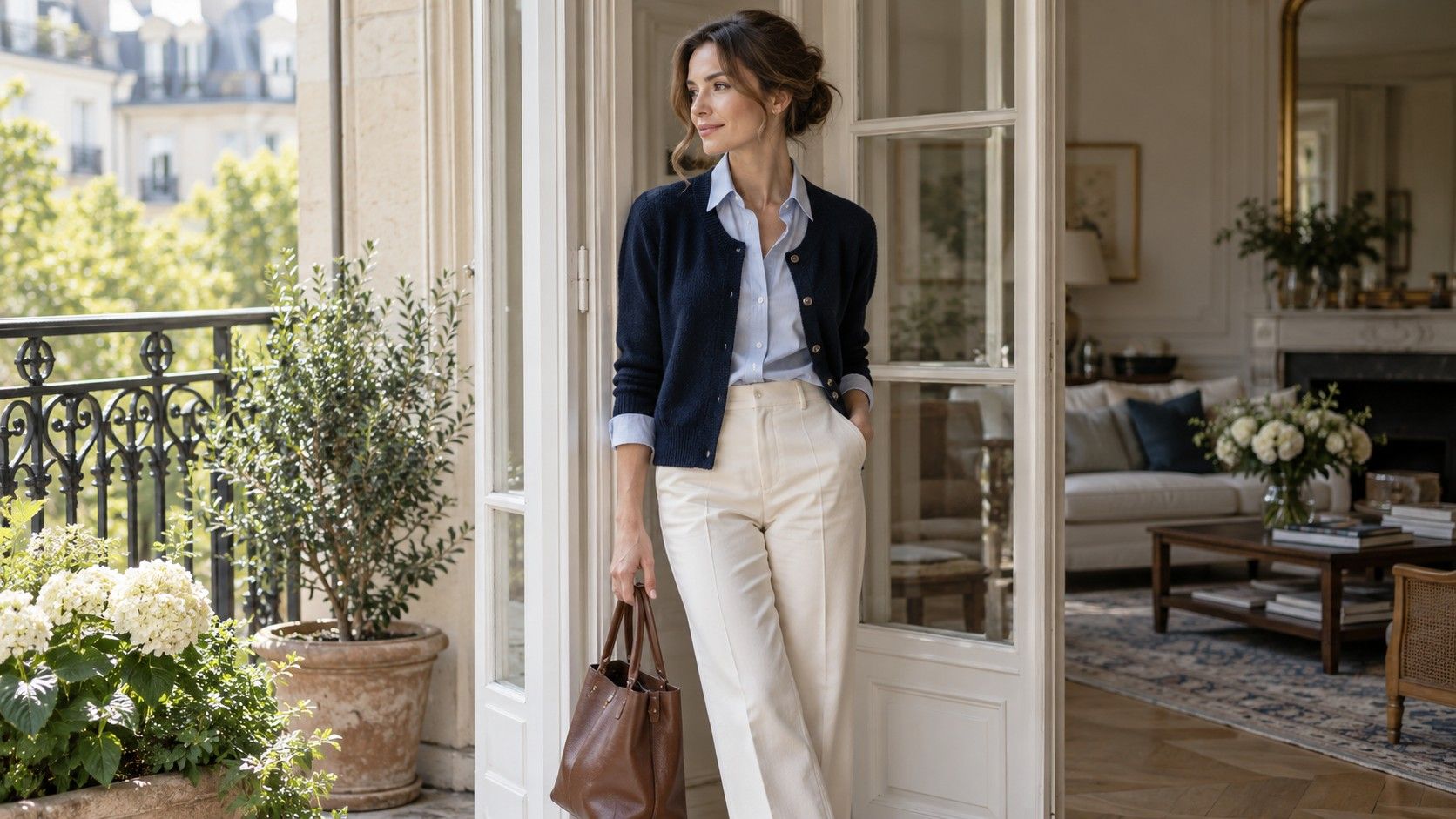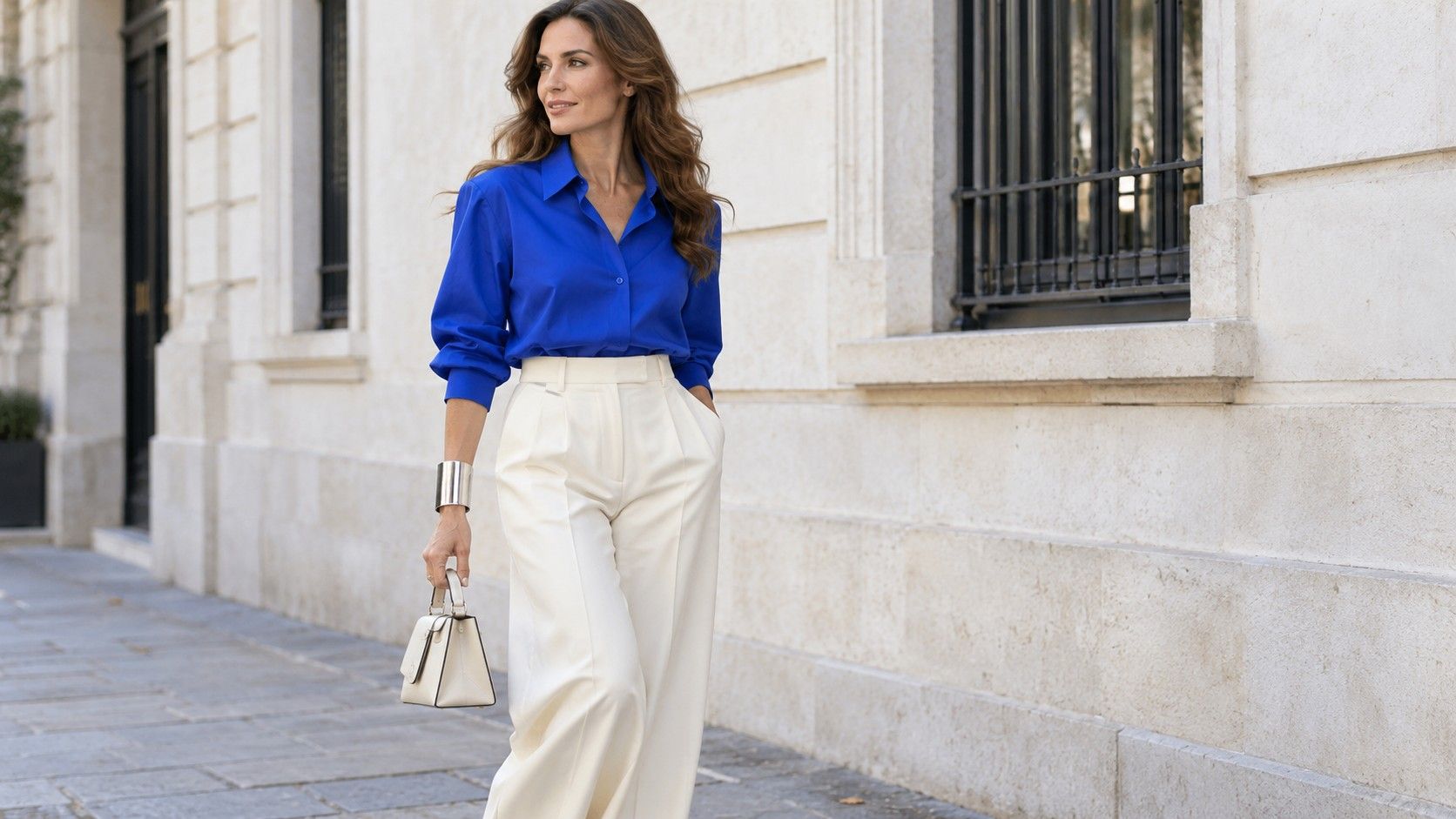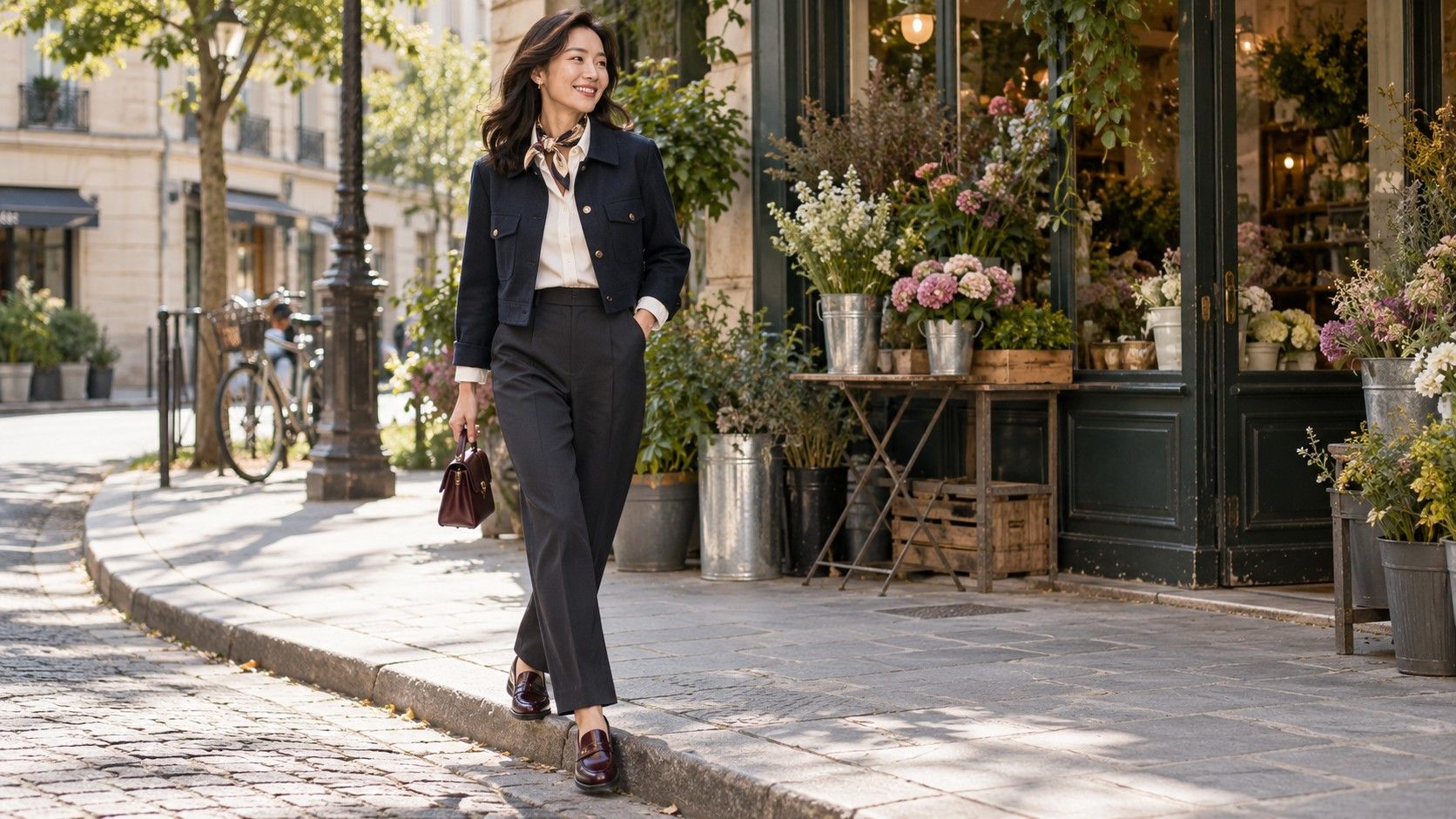
A bright sock above a dark shoe, a crisp collar beside a soft knit or a small checked bag can change a familiar outfit. Gamine style essence is useful here as an optional way of talking about lively detail and contrast. It is not a test of your age, height, facial features or character. You can enjoy these garment choices in any amount, including just one small interruption in otherwise quiet clothes.
Choose one place for a visual interruption
Pick the place where you want attention to pause. With a plain navy knit and straight trousers, that might be the neckline. A light collar under the knit creates a clear edge close to the face. If you also add a patterned belt, bright shoes and a prominent bag, the eye has several competing stops. That may be enjoyable, but start with one so you can recognise what each change contributes.
An interruption can be a change of shape rather than colour. Rounded pockets on an otherwise square jacket, a short row of oversized buttons or a pointed flat shoe beneath a loose hem all offer different kinds of punctuation. Try the outfit without the feature, then restore it. If you miss the detail immediately, it is doing a job you value.
Use existing pieces for the first comparison. Turn back the cuffs of a shirt to reveal the lighter reverse, move a brooch from the lapel to a pocket, or let a striped sleeve show below a plain jacket. Secure anything that could snag and check that it stays put while you move. A clever arrangement that needs constant repair will quickly become tiresome.
Try compact details without sizing down
Compact detail means a concentrated shape, not clothing that is too small. A short collar, neat pocket flap or close grouping of buttons can sit on a roomy shirt. The garment still needs space across the shoulders and upper arms, and its fastening should lie comfortably when you sit. Size labels do not tell you how much visual detail an outfit contains.
Compare a jacket with small patch pockets against one with long flap pockets. Keep the rest of the outfit as similar as possible. The small pockets produce more frequent stops across the front; the longer flaps create broader horizontal lines. Either can work. Choose the arrangement that suits the impression you want and the amount of pocket space you actually use.
Accessory scale offers another route. A short necklace with a clear shape can look concentrated against a plain crew neckline. A tiny pendant on a long chain may disappear into a printed top, while a larger pendant may be easier to read. Small is not automatically more playful. The relationship between accessory, background and viewing distance matters.
Trouser and sleeve length can expose a deliberate break, but leave room for the conditions of the day. An ankle-length hem shows socks and shoes clearly; a longer hem may be more useful in cold weather. A turned cuff can add a band of contrast without permanently altering the trousers. Check that the fold does not tighten the leg or unravel with every few steps.
Body proportions can help you choose where to put these edges, without assigning you a type. Try a jacket hem above and below the trouser pockets, or compare a high bag position with a lower one. Notice where the garment lines meet. You are deciding where a colour or shape changes, not proving that your body belongs in a particular style system.
Use pattern scale with a quiet base
Pattern becomes easier to judge when it has a clear background. Try a small checked shirt with plain trousers and an untextured jacket. Look at the check from a few steps away: does it stay legible, blend into a mottled surface or create a restless effect? None of those outcomes is inherently wrong, but they produce different amounts of visual activity.
Fine stripes may look quiet until several striped items meet. A striped cuff under a striped jacket can create an accidental clash of spacing. If you want playful outfit contrast with fewer moving parts, leave the jacket plain and let the cuff supply the pattern. A single patterned bag is another option when you prefer an uninterrupted neckline.
Consider texture alongside print. A coarse knit introduces visual activity even when its colour is solid. Pairing it with a dense check adds two kinds of detail in the same area. Swap one for a smoother fabric and compare. The quieter combination may make the check easier to see, while the textured version may suit a more layered look.
A small print is not a requirement. One broad stripe on a sweater or large spots on a scarf can deliver a clear, graphic interruption. What matters is the area it occupies and the surrounding space. A large motif on a small accessory can feel contained; a fine all-over print across a long coat can be much more active.
Before buying a patterned item, hold it beside two outfits you already wear. Check the undertone, the darkest colour and the amount of exposed pattern after adding a coat. If only a narrow sliver shows, a complex design may be lost. A simpler border or bolder repeat could do the job with less effort.
Keep color playful within your own palette
Playfulness does not require saturated primary colours. If you like muted shades, try moss green beside dusty pink, or charcoal with a soft blue sock. The change can come from light against dark, warm beside cool or a matte surface against a slight sheen. Choose a combination you enjoy seeing in daylight, away from the strong colour cast of a fitting-room lamp.
Personal color language can help you describe a preference, but it does not decide how much contrast you must wear. You might prefer similar colours near your face and a sharper accent at the shoes. A quiet taupe knit with plum trousers and dark loafers can still have a distinct rhythm. A coloured sole, collar edge or bag strap can provide the small break.
If an accent feels disconnected, repeat it in a smaller amount. A burgundy sock might connect to a narrow stripe in a scarf, while a green bag could echo a button. The repeat need not be exact. Look for a family resemblance in depth or softness instead of spending time chasing a perfect match across different materials.
Try changing the position before rejecting the colour. A vivid scarf surrounds the face; the same colour on a belt makes a narrower line lower down. If you enjoy the shade but feel overwhelmed by the scarf, a small accessory may offer the right amount. This is an experiment in placement and preference, not a verdict on your colouring.
For an easy weekend combination, begin with jeans and a knit you trust. Add contrasting socks with trainers, or a patterned scarf with plain socks. For work, use a shirt with a clearly defined collar beneath a simple cardigan and keep the shoes practical. Both outfits can explore the same idea while meeting different needs for warmth, formality and movement.
Take the outfit beyond a styled photograph
Graphic details can look convincing while standing still and become awkward in use. A stiff collar might push into your neck under a coat, a short bag strap may restrict your shoulder, or a decorative buckle may press against the desk. Wear the complete combination for ordinary movements before relying on it for a full day.
Check fabric movement as well as fit. A crisp cropped jacket and fluid wide trousers have different rhythms when you walk. That contrast can be pleasing, but a very stiff jacket may catch on the trouser waistband. A softer jacket or smoother layer beneath it can change the interaction. Choose the construction that lets you reach, sit and carry what you need.
Socks and exposed hems also have practical consequences. Test the sock height while seated, since trouser legs rise. Check whether the shoe rubs where the sock ends and whether the cuff holds its shape after walking. In wet weather, a longer sock and a sturdier shoe may be the better version of the same outfit idea.
Keep the amount of detail adjustable. You can remove a scarf when a room becomes warm or switch a prominent bag for a plain one when you need to carry more. Build around clothes that already work, then add the detail. That makes the experiment useful on an ordinary Tuesday instead of limiting it to a photograph taken by the front door.
When a combination succeeds, write down the specific relationship: light collar above a dark knit, compact bag against a loose coat, or a bold sock below a plain trouser hem. Those observations travel to other clothes more easily than a rigid shopping list. The next outfit can repeat the relationship while using different colours, fabrics and shapes.